How to Start a Shared Expense Log With Your Co-Parent
How to start a shared expense log with a reluctant co-parent: the opening message, the five columns you need, and what to do if they never join in.

For about a year after my separation, my expense tracking system was a WhatsApp thread. I'd buy school supplies for three kids, photograph the receipt, send it, and wait. Then came the part I dreaded: the reminder. Hey, that comes to $84 for your half. Then the question back: for what, exactly?
I was a product manager arguing line items over WhatsApp with the mother of my children, every single week, in a city where neither of us had family to fall back on.
The thing nobody tells you is that starting a shared expense log is rarely a tooling problem. It's a trust problem wearing a spreadsheet costume. So this is less about columns and more about how to get a log running when the other parent thinks it's a trap.
Why do co-parents resist a shared expense log?
Most reluctance comes down to three fears, and none of them are really about spreadsheets. One: the log will be used against them later, in court or in an argument. Two: it will commit them to paying for things they never agreed to. Three: it will expose that they're contributing less. Naming the real objection is what unsticks the conversation.
That second fear is the one I underestimated for the longest time. My ex wasn't resisting the record. She was resisting what she thought the record implied: that if judo showed up in a shared log, she'd owe half of judo forever.
She'd told me plainly she wouldn't pay for it. Then my son got hurt at practice, and after that she said she was done with activities entirely. Not judo, not swimming, nothing. Around $130 a month for judo, plus what had been $260 a month for Saturday private school for two of them, all landing on one income. We eventually dropped the Saturday school and moved to a tutor, because I couldn't carry it alone.
So when I finally proposed a log, I led with the thing she was actually worried about:
A log doesn't mean you owe half of everything. It means we both stop guessing.
That distinction did more work than any feature I could have built.

What does a shared expense log actually need?
Five fields: date, which child, category, amount, who paid. That's a working log. Everything else you're tempted to add on day one, such as approval status, notes, split percentage, running balance, is the reason most co-parenting spreadsheets die in week three. Start narrow enough that a tired person can fill it out in fifteen seconds.
Here's the minimum viable version:
| Date | Child | Category | Amount | Paid by |
|---|---|---|---|---|
| Aug 12 | Amina | School supplies | $47.80 | Dad |
| Aug 14 | Timur | Judo (monthly) | $130.00 | Dad |
| Aug 15 | All three | Groceries (kids' week) | $96.20 | Mom |
Attach a photo for anything over about $50. Not because your co-parent is untrustworthy, but because a receipt is the only thing in this whole system that can't be argued with. My ex still asks me to attach receipts, and honestly, she's right to. It removes an entire category of disagreement.
One rule I'd fight for: log it the same day. Not Sunday, not at the end of the month. Two weeks later you won't remember whether the $62 at Jean Coutu was children's Tylenol and a thermometer, or that plus shampoo for yourself. That fuzziness is where the arguments live. If you want a fuller breakdown of what belongs where, we mapped out the standard co-parenting expense categories separately.
The three rules to agree on before the first entry
Not the split. Not the app. These three:
- A floor. Nothing under $20 to $25 gets logged or discussed. Nerves cost more than a $9 pack of socks.
- A booking rule. Whoever signs the kid up for something pays that invoice first and logs it. Approval happens before enrolment, not after the charge lands.
- A settle-up rhythm. Monthly, on a fixed date. Not "when the balance gets big," which in practice means whenever one of you is already annoyed.
Write those three lines down. Send them as a message. That message is your agreement, and it's worth more than the log itself.
How do you bring it up without starting a fight?
Keep it short, put it in writing, and make it about your own limitations rather than their behaviour. Long messages read as building a case. A two-sentence text reads as a logistics question. Send it on a neutral day, never at a handoff, and never in the same thread as an unresolved argument.
The version that worked for me, roughly translated:
I keep losing track of what I've spent on the kids and I hate having to ask you about it. I'm going to start writing everything down in one place. You don't have to use it. If you want to add yours, it's there.
Notice what's missing. No accusation. No request. No deadline. "You don't have to use it" is doing the heavy lifting, because the moment it becomes a demand, the log becomes a battleground.
What I'd avoid: sending a shared spreadsheet invite as your opening move. An invitation to a document with your name already in the edit history feels like being served papers. Describe the plan in plain words first, share the artifact second.
And never bring it up during pickup or drop-off. My kids are 11, 9 and 5. The middle one hears everything and reports it to the other two.

What if your co-parent never joins in?
Then run it alone, properly, for 60 days. A solo log is not a lesser version of a shared log. It's the only thing that turns "I feel like I'm paying more" into a number, and a number is the only argument that survives contact with a defensive co-parent.
This is the part that surprised me most about my own situation. Once I started logging every single thing, I saw that I was paying substantially more than half. Not because anyone was cheating, but because there was a whole tier of purchases I'd stopped even mentioning. A jacket here. A toy for the youngest. $200 in waterpark tickets. $460 for summer camp. Each one felt too small or too "optional" to be worth the conversation, so I'd absorb it. Multiply that by a couple of years.
I couldn't see the pattern until it was in rows.
That's also when I got the line I still think about: I'm not paying for your impulsive purchases. It stung. But once the log existed, I could actually respond to it, because we were now disagreeing about which categories were shared rather than about whether I'd bought a jacket at all. Narrower fight. Much better fight.
Two things a solo log gets you even if the other parent never touches it:
- A real monthly baseline. After three months I could tell you roughly what our three kids cost per month. That changed how I planned September, when school and activity invoices all land at once. Our back-to-school expense breakdown covers that pileup specifically.
- Documentation, if it ever matters. Both the Federal Child Support Guidelines in Canada and most US state formulas treat things like childcare and medical costs as shareable on top of base support. Contemporaneous receipts are what make that claim real. Reconstructing them the week before a hearing does not work; a lawyer will tell you the same.
If your co-parent has moved past reluctance into outright refusal to pay their share, that's a different problem with a different playbook, and we wrote it up in what to do when a co-parent won't split expenses.
Ready to simplify co-parent expenses?
CoParentSplit makes it easy to track, split, and settle shared child expenses — no conflict required.
Start Free NowSpreadsheet or app: which should you start with?
If only one of you will ever log anything, a spreadsheet is fine and free. Once both parents log, a shared sheet starts failing at specific, predictable things: no notification when an expense is added, no receipt storage, no record of who changed what, and no automatic balance. Those gaps are exactly where the old arguments come back.
I ran the WhatsApp-and-memory version for a year, which I don't recommend, then built the thing I wanted instead. The honest comparison, including where a Google Sheet genuinely wins, is in expense tracker vs spreadsheet.
On price, because it matters when money is the whole problem. When I last checked OurFamilyWizard's pricing page in September 2026, their Essentials plan ran $149.99 per year per parent, and the top Max tier was $299.88 per parent. It's a serious product with court-ready reporting, and some people genuinely need that. For two parents who just need to agree on who paid for winter boots, it's a lot. CoParentSplit is $6.99 a month or $59.99 a year and that single price covers both parents. If you want the feature-level version, we compare them directly on the OurFamilyWizard comparison page.
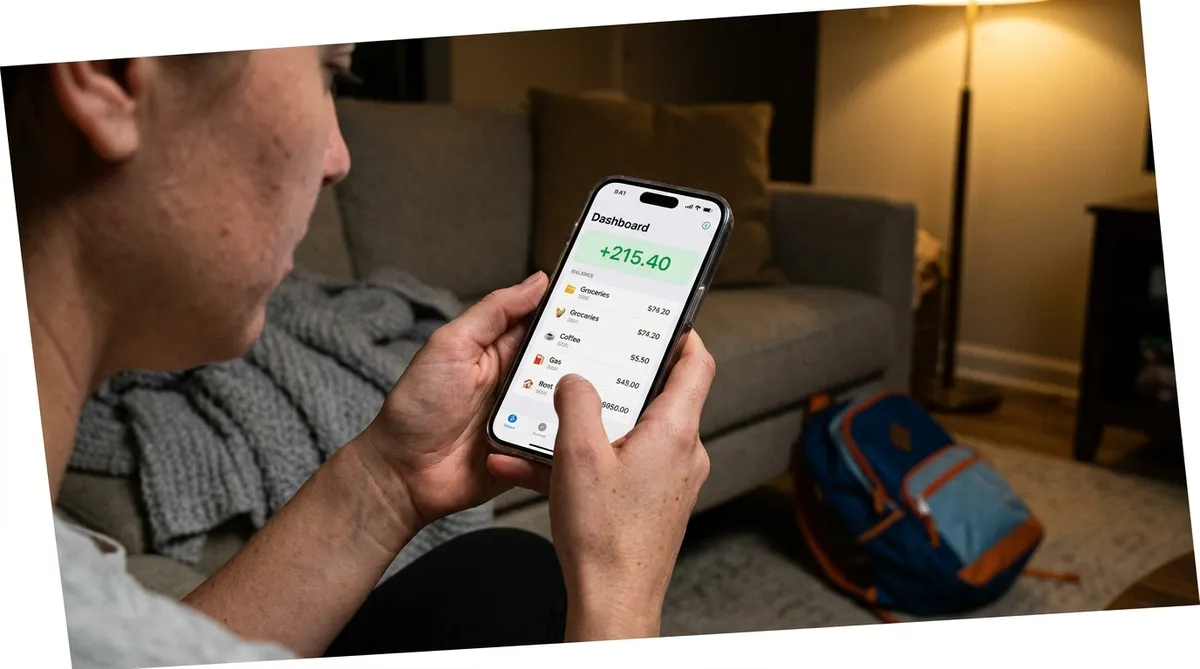
The bigger reason I'd pick an app over a sheet with a reluctant co-parent: the notification does the asking. Nobody has to send the text that starts with "hey, so."
What the first month actually looks like
Realistically: week one you log everything, week two you log most things, week three you forget for four days and have to catch up from your bank statement. That's normal and it isn't failure. The habit stabilizes somewhere around day 20, in my experience, and the first monthly settle-up is when the other parent starts taking it seriously, because it's the first time the number arrives without an argument attached.
A few things I'd tell my own past self:
- Don't send a running commentary. One monthly summary, no editorializing. The log speaks; you don't have to.
- Expect them to audit the first month. Let them. Being checked is better than being doubted.
- If they add even one expense of their own, that's the win. Don't celebrate it out loud.
- Keep logging on the months when nothing is contested. A record only has authority if it's continuous.
I'll be straight with you: two years in, we still disagree about activities and about entertainment spending like trampoline parks. The log didn't resolve that. What it resolved was everything underneath it. We both know what the kids cost. We both know who paid what. Nobody has to prove anything on WhatsApp at 10pm.
Frequently Asked Questions
How do I start a shared expense log if my co-parent won't cooperate? Start it alone and keep it accurate for 60 days. Log the date, child, category, amount, and who paid. Don't ask permission and don't send weekly summaries. A log with two months of real entries is a conversation starter; a log with three entries and an invitation is a demand.
What should a co-parenting expense log include? Five fields cover almost everything: date, which child, category, amount, and which parent paid. Add a receipt photo for anything over about $50. Skip fields for approval status, notes, and running balances at the start. Extra columns are the fastest way to get a log abandoned.
Should I use a spreadsheet or an app to track shared child expenses? Use a spreadsheet if only one of you will ever log anything. Use an app once both parents log, because a shared sheet has no notifications, no receipt storage, and no audit trail of who edited what. The tracking habit matters more than the tool for the first month.
What is a reasonable minimum amount to log? Around $20 to $25. Below that, the time spent discussing it costs more than the item. Set the floor in writing before you start so neither parent feels the other is being petty, and revisit it if the small purchases start adding up to real money.
Can an expense log be used in court? It can support a claim about special or extraordinary expenses, but only if it's contemporaneous and receipted. Entries logged the same day with photos carry weight; a spreadsheet you filled in from memory before a hearing does not. Ask your lawyer what format your jurisdiction expects.
Start this week, not after the next argument
Pick the five columns. Write the three rules in one message and send it. Log tonight's pharmacy receipt before you go to bed. That's the whole first step, and you can do it without your co-parent's agreement or even their knowledge.
If they join in month two, you've got a shared log. If they never do, you've still got the number you were missing.
CoParentSplit tracks shared child expenses, works out who owes what, and notifies the other parent so you don't have to send that message yourself. It's $6.99 a month or $59.99 a year, covering both parents, not each. The free tier handles 10 expenses a month, which is enough to test whether you'll actually stick with it. You can also sanity-check your own split first with the free expense calculator.
Stop fighting about money. Start tracking it.
Related: Co-Parenting Expense Tracker vs Spreadsheet · What to Do When a Co-Parent Won't Split Expenses · Co-Parenting Expense Categories Guide
Ready to simplify co-parent expenses?
CoParentSplit makes it easy to track, split, and settle shared child expenses — no conflict required.
Start Free Now
Founder of CoParentSplit
Single dad of 3, product manager, and immigrant in Montreal. Built CoParentSplit after his own divorce because he needed a simpler way to split child expenses with his co-parent.