Ohio Child Support Deviation (ORC 3119.23): What Judges Actually Adjust For
How an Ohio child support deviation works under ORC 3119.23: the factors judges use, the 90 and 147 overnight rules, and the records you need to ask for one.

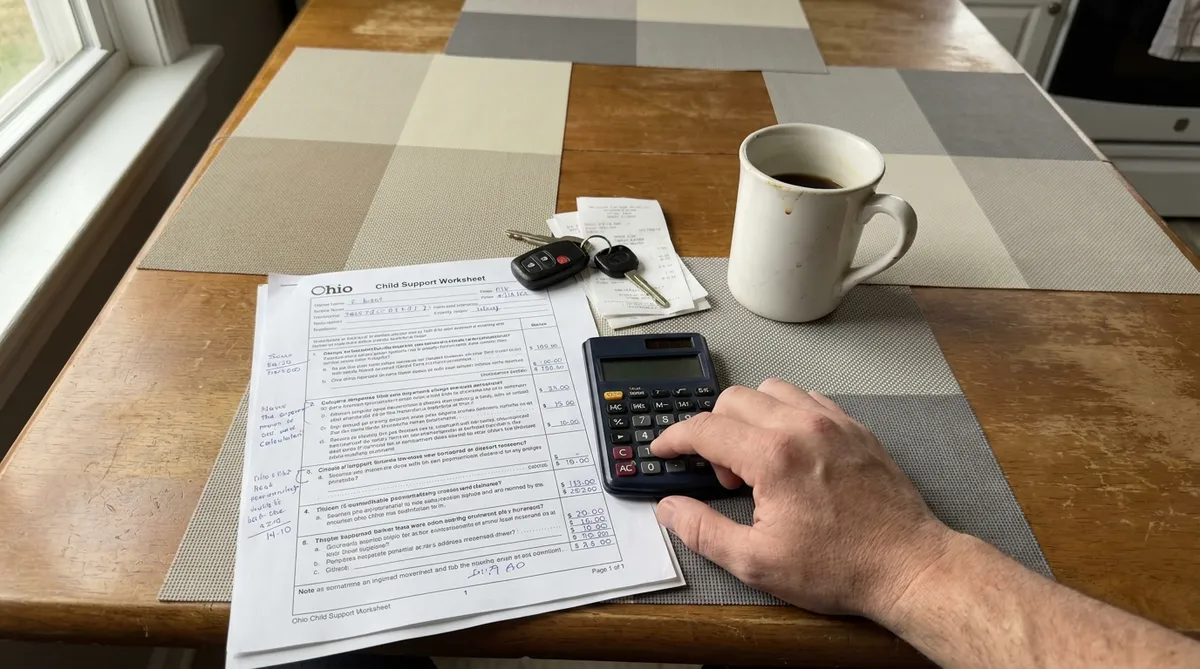
The Ohio child support worksheet gives you a number. For a lot of parents that number feels wrong in one very specific way: it has no idea that you're the one paying for judo, winter boots, and the tutor. A deviation under ORC 3119.23 is the legal door for that argument, and it's narrower than most people expect.
I'll be straight with you before we start: I co-parent in Montreal, not Ohio. I'm not a lawyer and this isn't legal advice. What I do have is three kids, two years of tracking every dollar I spend on them, and a clear sense of which records hold up when someone challenges them. That second part travels across borders better than you'd think.
What is a child support deviation in Ohio?
A deviation is a court-ordered support amount that differs from what the Ohio worksheet calculates. Under ORC 3119.22, a judge can order it only after determining the guideline figure would be unjust or inappropriate and therefore not in the best interest of the child, and the court must enter that determination in the journal along with findings of fact.
Read that test again, because the word "and" is the whole ballgame. Proving the number is unfair to you isn't enough. You have to connect it to the child.
The findings-of-fact requirement is the part parents underestimate. A magistrate who grants a deviation without writing down the reasoning has handed your co-parent an easy objection, and one who denies it without explaining why has done the same to you. So the practical goal of your evidence isn't sympathy in the hearing room. It's giving the court specific facts it can copy into an entry.
Deviations also run both ways. The same statute that lets a dad with 165 overnights ask for less is the statute a mom uses when a child's therapy schedule costs $700 a month that the worksheet never accounted for.
Which ORC 3119.23 factors actually move the number?
ORC 3119.23 lists seventeen factors, lettered (A) through (Q). In everyday practice a handful of them do almost all the work: parenting time, other court-ordered payments, special needs of the child, childcare costs above the state cap, and significant in-kind contributions. The rest exist for real but rarely carry a case by themselves.
Here's the short list, translated out of statute-speak.
| Factor | What it looks like in real life | Usual direction |
|---|---|---|
| (A) Special and unusual needs of the child | Weekly therapy, medical equipment, a specialized school placement | Up |
| (B) Other court-ordered payments | A support order for a child from another relationship, spousal support to a different ex | Down |
| (C) Extended parenting time or extraordinary parenting-time costs | Near-equal schedules, or 300 miles of driving per exchange | Down |
| (H) Taxes actually paid or estimated to be paid | A self-employed parent whose real tax burden doesn't match the worksheet's assumption | Either |
| (I) Significant in-kind contributions | Direct payment for lessons, sports equipment, schooling, or clothing | Down |
| (J) Extraordinary work-related expenses | Mandatory tools, licensing, travel a parent can't avoid | Either |
| Extraordinary childcare costs | Actual daycare above the statewide average cap used in the calculation | Up |
The catch-all sits at the end of the list: any other relevant factor. Lawyers use it constantly, and it's also where weak arguments go to die, because a factor with no number attached gives the court nothing to write down.
Our Ohio expense rules guide walks through the underlying income-shares calculation, the add-ons, and cash medical support. This post is about the adjustment layer that sits on top of it.
The 90 and 147 overnight rules
Parenting time is the most common route to a lower Ohio order, and it works in two stages that get confused with each other constantly.
Stage one is automatic. At 90 or more court-ordered overnights per year, the obligation is reduced by 10% under ORC 3119.051. That's a worksheet adjustment, not a deviation, and nobody argues it.
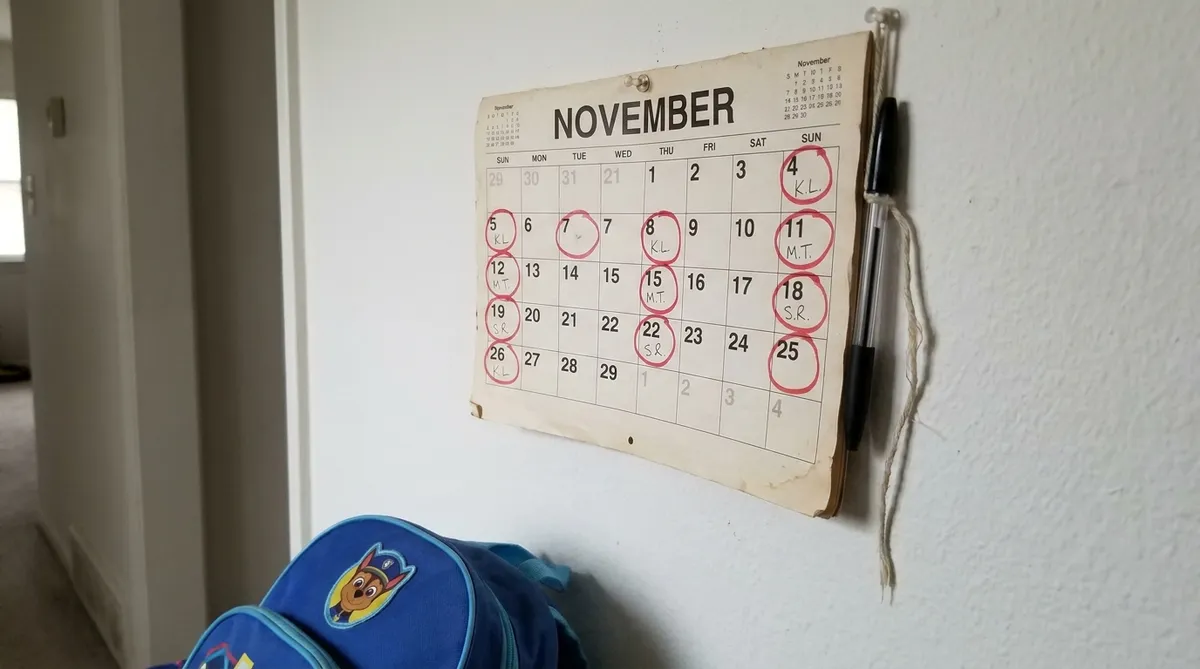
Stage two is ORC 3119.231. When court-ordered parenting time exceeds 90 overnights, the court shall consider granting a deviation under 3119.22 for the extended-parenting-time reason in 3119.23(C), on top of that 10%. And when parenting time equals or exceeds 147 overnights, a court that declines to grant the deviation has to specify in the order the facts behind that decision.
That 147 number is worth circling. It's about 40% of the year (147 out of 365), and 90 overnights is roughly 25%. Neither one is "half the time" in the way parents usually mean it.
One warning. The statute says court-ordered overnights. If your decree says alternating weekends plus one midweek evening but you've actually had the kids Wednesday through Sunday for two years, the worksheet doesn't know that, and showing up with a calendar instead of an amended order is how these motions get denied. The Ohio Supreme Court's child support bench card is the same reference material the magistrate is working from, and it's built around what the order says.
What counts as a "significant in-kind contribution"?
Factor (I) covers significant in-kind contributions from a parent, and the statute names them out loud: direct payment for lessons, sports equipment, schooling, or clothing. If you are the parent who buys the cleats and pays the tuition, this is your factor. The load-bearing word is significant, and proving significance is entirely on you.
This is where my own story is useful, even from the wrong country.
Judo for my oldest son runs $130 a month. There was a Saturday private program for two of the kids at $260 that we eventually gave up on, because carrying it alone was wrecking my budget, so we switched to a tutor. Summer camp for one kid was $460 last year. Waterpark tickets for the three of them, $200. On top of that there's the constant drip: shoes, school supplies in September, a winter coat that fits this year.
For a long stretch, my answer to all of it was to pay and say nothing. When my son got hurt at judo, my ex told me she wasn't paying for any activities again, and I got a line I still remember: "I'm not paying for your impulse purchases." At that point buying a $40 pair of pants myself was genuinely cheaper than the two-day text argument about whether the kids needed pants. I told myself that was taking the high road. What it looked like on paper was a father who had volunteered.
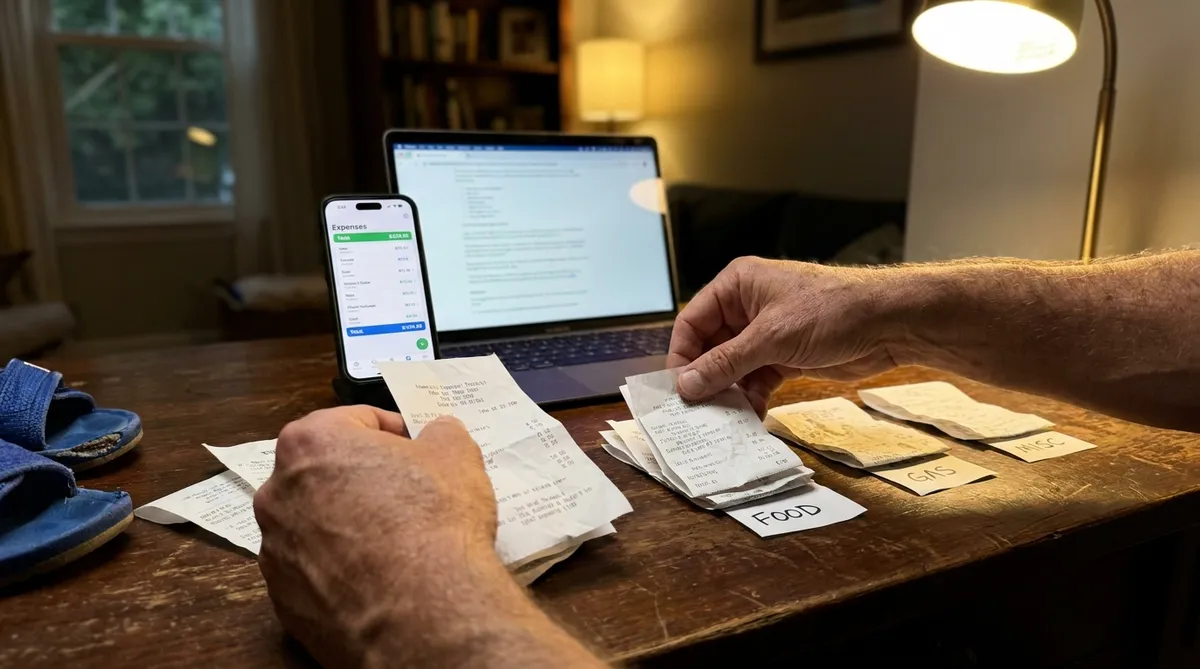
Then I logged twelve straight months of it in the app I ended up building, and the total was the part that stung. I was well past a 50/50 split, not because of any single big fight, but because of dozens of small purchases I had never counted. That gap existed the whole time. I just had no way to show it, and a number you can't show is a number that doesn't exist in a courtroom.
That's the real difference factor (I) draws. A parent who quietly absorbs costs and a parent who documents them are making the same sacrifice and standing in completely different positions.
Ready to simplify co-parent expenses?
CoParentSplit makes it easy to track, split, and settle shared child expenses — no conflict required.
Start Free NowHow do you document in-kind spending so it survives a hearing?
The bar isn't high, but it is specific: dated entries, a category the statute recognizes, a receipt behind each one, and a total your co-parent has seen before the hearing. Six things get you there.
- Log it the same day. Not weekly. My rule after two years is that anything I don't enter within 24 hours becomes a guess, and a guess is what the other side attacks first.
- Use categories that match the statute. Lessons, sports equipment, schooling, clothing, medical. If your ledger says "kids stuff, $312," nobody can map it onto factor (I). Our expense categories guide has the full breakdown.
- Attach the receipt to the entry. A photo of the daycare invoice beside the amount beats a bank line that says "VISA DEBIT 4412."
- Track both parents' spending in one place. A ledger showing only what you paid reads as advocacy. One showing what each of you paid, month by month, reads as a record.
- Produce annual totals per category. "$1,560 in lessons and $890 in clothing over 12 months" is a finding of fact. A 400-row printout is homework you've handed the magistrate.
- Write down what was agreed, and when. For activities especially, the question of who signed off before enrollment comes up constantly.
If you want to sanity-check what a proportional split should look like against your two incomes, run it through the expense calculator first. Sometimes the answer is that you're closer to even than it feels, and that's cheaper to learn in your kitchen than in a hearing.
One more thing I'd push back on if a friend asked. A ledger both parents have been using all year carries more weight than one built the week before a filing, for an obvious reason: your co-parent has had twelve months to dispute the entries and didn't.
What Ohio judges usually won't deviate for
Deviation is discretionary, and Ohio outcomes vary a lot by county and by judge. Some requests are just weak on the law no matter who hears them.
"My co-parent refuses to pay for anything." Refusal isn't one of the seventeen factors. What you actually spent is. Reframe the request around your documented contributions and the child's involvement in the activity, and leave the grievance out of the motion. This is the same wall parents hit with medical bills, which we covered in what to do when your co-parent won't split medical expenses.
A premium choice the other parent objected to up front. Enrolling a child in a $9,000-a-year program over your co-parent's written objection and then asking the court to treat it as a shared burden is a hard sell. The pattern courts respond to is continuity: the child was already in the activity, both parents supported it before the split.
College. Ohio child support doesn't extend to post-secondary education, and support generally ends at 18, or 19 if the child is still in high school. There's a real nuance here though, and it cuts the other way: post-secondary expenses a parent is voluntarily paying for their own child are a listed factor in 3119.23. A judge can't order you to fund a degree, but what you're already spending on an older kid's tuition can be weighed in the analysis.
Deviation as a bargaining chip. If the motion reads like a way to punish the other household, the best-interest half of the 3119.22 test collapses immediately.
And the honest limit on this whole post: an hour with an Ohio family law attorney costs less than one wrong filing, and county practice matters enough that a local lawyer will tell you things no statute will.
Do you need a deviation, or just a working split?
Most parents who search for "child support deviation Ohio" are describing a different problem. The monthly base order usually isn't what they're fighting about. The $460 camp deposit in March is, and the winter coats in November, and the registration fee that appears on a Tuesday with no warning.
A deviation renegotiates one number, once, through a review or a motion to modify that comes with its own thresholds. It does nothing about the two hundred small transactions in between, and it won't stop the text messages. Those need a system, not an order. If you're unclear which layer your money lives in, child support versus shared expenses is the cleaner starting point, and extracurricular costs after divorce covers the category that generates the most conflict.
Here's the useful overlap: the record you'd build to support a deviation request is the same record that makes the day-to-day split stop being a negotiation. I started tracking to prove a point to my ex. What I got instead was knowing what three kids actually cost per month, which means I can see January's expenses coming in December.
Frequently Asked Questions
What is a child support deviation in Ohio? A deviation is a court-ordered amount that differs from the number the Ohio child support worksheet produces. Under ORC 3119.22, a judge can only order it after finding the guideline amount would be unjust or inappropriate and not in the child's best interest, with findings of fact entered in the journal.
How many overnights do you need for a child support deviation in Ohio? Ninety court-ordered overnights per year triggers a 10% reduction under ORC 3119.051, and at more than 90 the court must consider an additional deviation under ORC 3119.231. At 147 or more overnights, a judge who declines the deviation has to state the facts behind that decision.
Does paying for my kid's lessons and clothes reduce my Ohio child support? It can. Significant in-kind contributions are a listed deviation factor in ORC 3119.23(I), and the statute names direct payment for lessons, sports equipment, schooling, and clothing. The word doing the work is significant, so you need dated records and totals, not estimates.
Can Ohio child support be deviated upward, not just down? Yes. Deviations run both directions. Upward requests usually rest on special and unusual needs of the child under ORC 3119.23(A), childcare costs above the statewide average cap, or other court-ordered payments in the other household. The same journal findings requirement applies either way.
Will an Ohio judge deviate because my co-parent refuses to pay for activities? Not on its own. Refusal isn't one of the seventeen factors. What can matter is what you actually paid instead, documented as an in-kind contribution, plus the child's demonstrated involvement in the activity. Outcomes vary a lot by county and by judge.
Your next step
Whatever you decide about filing, start the ledger now. As of September 2026 the statute and the overnight thresholds above are current, but the part you control has nothing to do with the statute: twelve months of dated, categorized, receipt-backed entries is the single thing that turns "I pay for everything" into a fact a court can use.
Pick a tool you'll actually open on a Tuesday night. A shared spreadsheet works if you're disciplined. CoParentSplit costs $6.99 a month or $59.99 a year and covers both parents on one ledger, and the free tier handles 10 expenses a month if you want to test whether you'll stick with it before paying anything.
Stop fighting about money. Start tracking it. Try CoParentSplit free and see what your first month of real numbers looks like.
Related: Child Support vs Shared Expenses: What's the Difference? · Co-Parenting Expense Categories Guide · Co-Parenting Expense Rules in Ohio
Ready to simplify co-parent expenses?
CoParentSplit makes it easy to track, split, and settle shared child expenses — no conflict required.
Start Free Now
Founder of CoParentSplit
Single dad of 3, product manager, and immigrant in Montreal. Built CoParentSplit after his own divorce because he needed a simpler way to split child expenses with his co-parent.