Shared Custody and School Fees: Real Expense Breakdown From a Dad of 3
What school expenses do co-parents actually split? A divorced father of 3 breaks down tuition, supplies, field trips, and after-school costs with real dollar amounts.

My son's Saturday private school cost $260/month for two kids. I paid every dollar of it myself for almost a year. Not because my ex refused outright, but because she said she didn't have the money, and I didn't want to fight about it in front of the kids. When I finally had to pull them out and switch to a tutor, it wasn't an education decision. It was a money decision. And that's the part nobody tells you about school expenses after divorce.
If you're sharing custody and trying to figure out who pays for what at school, you probably already know the math isn't the hard part. The arguments are.
What School Expenses Are Co-Parents Required to Split?
Most custody agreements and court orders require both parents to share education-related costs for their children. The exact split depends on your jurisdiction, your income ratio, and whether an expense counts as "basic" or "extraordinary." But here's the general rule: if it's required for the child to attend school, both parents pay.
Mandatory costs that almost always get split:
- Registration and enrollment fees
- Textbooks and required materials
- Technology fees (Chromebook rentals, tablet programs)
- Lab fees for science courses
- Mandatory school uniforms
Gray area costs that cause 80% of the arguments:
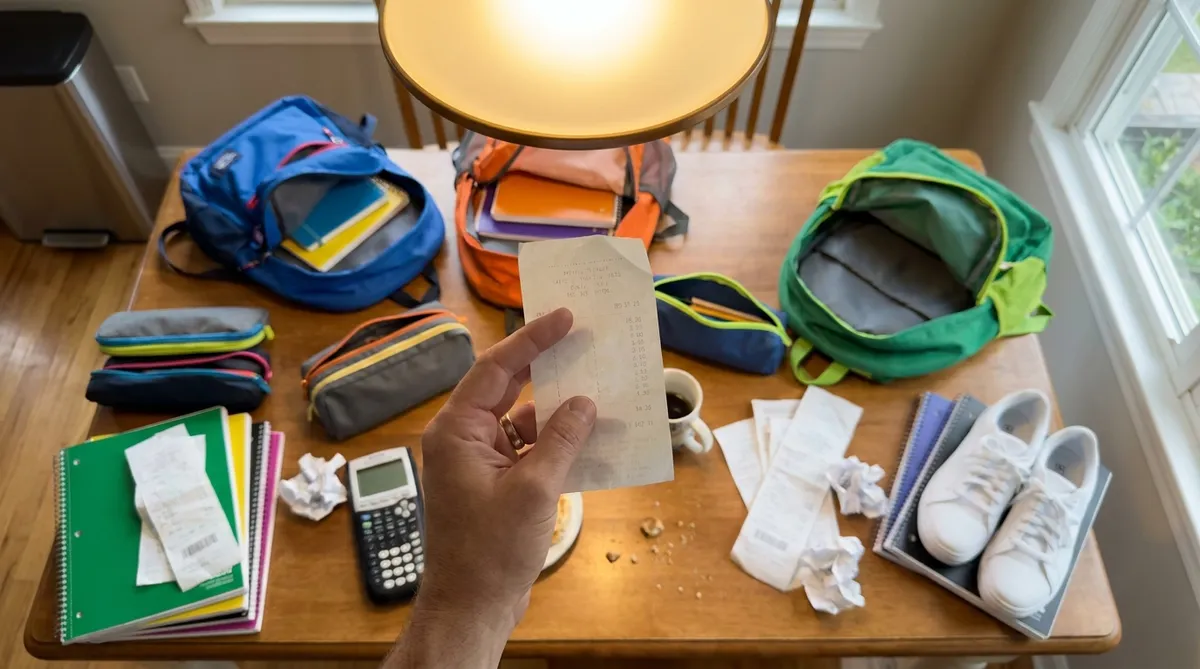
- School supplies (September shopping sprees)
- Field trips and class outings
- School lunch plans and cafeteria accounts
- After-school programs
- School photos
- Yearbooks
- Class t-shirts, spirit wear, graduation gowns
In Canada, Section 7 of the Federal Child Support Guidelines separates these into "special or extraordinary expenses" that get split proportionally to each parent's income. In the U.S., it varies by state. California Family Code Section 4062 covers it. Texas Family Code Chapter 154 handles it differently. New York uses yet another formula.
The law gives you a framework. But real life? Real life is your ex texting you a $180 receipt for new glasses at 9 PM with no context.
How Much Do School Expenses Actually Cost Per Year?
As of April 2026, here's what I spend on my three kids (ages 5, 9, and 11) in Montreal. These numbers are real, pulled from my own expense tracker.
| Expense Category | Annual Cost (3 kids) | How Often |
|---|---|---|
| School supplies (September) | $350–$460 | Yearly |
| Indoor shoes + gym clothes | $120–$180 | Yearly |
| School lunches / cafeteria | $1,200–$1,800 | Monthly billing |
| Field trips | $150–$300 | 3–5 per year |
| School photos | $60–$90 | 1–2 per year |
| After-school programs | $800–$2,400 | Monthly |
| Tutoring (replaced private school) | $150–$250/month | Monthly |
| Technology fees | $75–$150 | Yearly |
Add it up: somewhere between $2,900 and $5,600 per year for three kids. And that's before you count clothing, winter coats, or extracurricular activities like sports and music.
For one kid, you're looking at roughly $1,000–$1,900 per year. For two, $1,900–$3,700.
These are public school numbers. Private school changes everything.
Who Pays for Private School After Divorce?
Private school tuition is probably the single biggest flashpoint in co-parenting finances. If both parents agreed to private school during the marriage, courts in most provinces and states expect both to keep contributing after separation. But if one parent enrolled the kids without the other's agreement? Courts are less sympathetic.
I know this one personally. My two older kids attended a private Saturday school here in Montreal. $260/month for both of them. My ex said she couldn't contribute. So I paid the full amount while also covering my son's judo classes at $130/month. That's $390/month in extra education costs, solo.
After several months of carrying that alone, I couldn't do it anymore. Not on one income in one of the most expensive cities in Canada. We switched to a private tutor. The tutor costs less. But I still think about whether my kids lost something in that transition. The decision was about my bank account, not their education. And that's a lousy feeling.
If you're facing a similar situation:
- Get it written down. A verbal agreement about tuition means nothing during a conflict. Your separation agreement or custody order should explicitly name private school and who pays what percentage.
- Keep enrollment records and receipts. If it goes to court, judges want documentation, not "she promised."
- Consider alternatives early. Tutoring, supplemental weekend programs, online courses. I waited too long to explore cheaper options. Don't wait until you're drowning.
Tutoring after separation
Tutoring sits in a weird spot. Some courts treat it as a necessary education expense, especially when a teacher or school psychologist recommends it. Others view it as optional.
Save any written recommendation from a teacher. An email saying "your child would benefit from tutoring in math" is worth its weight in gold if your co-parent disputes the expense later. I learned this from a family lawyer friend in Montreal who told me: "If it's not in writing, it didn't happen."
How Do You Actually Split School Costs 50/50?
The short answer: you probably don't. Most co-parents think they're splitting 50/50, but one parent consistently pays more. This happens because everyday purchases are easy to forget, one parent tends to be the "default buyer," and nobody tracks the small stuff.
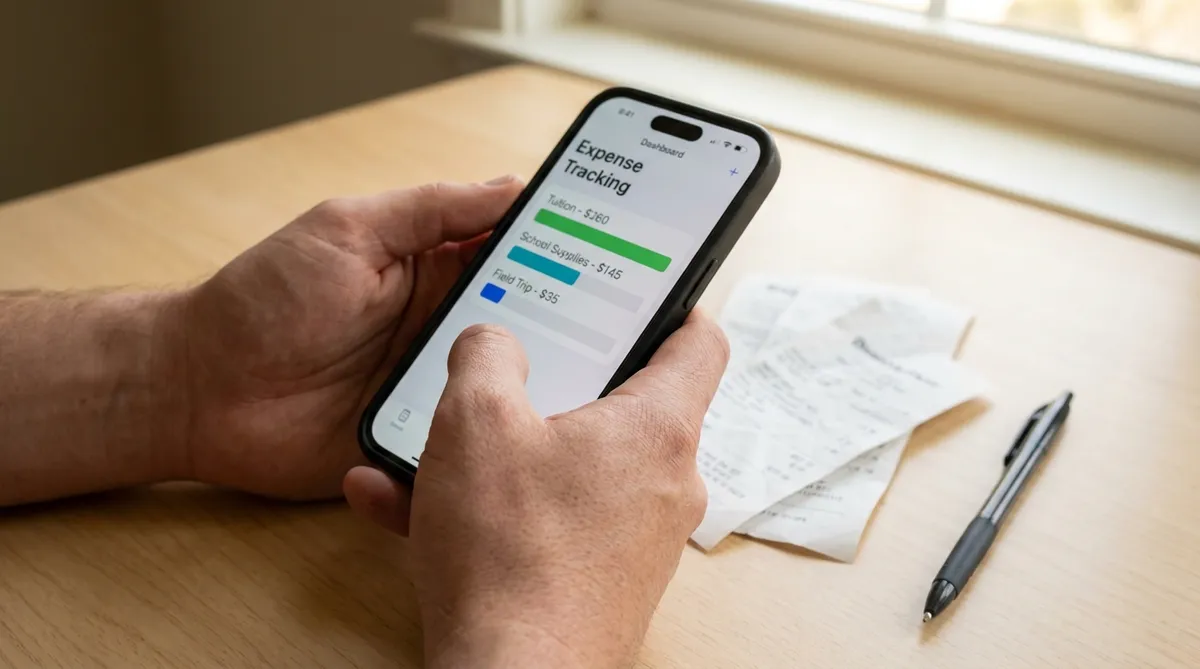
I thought we were splitting evenly for almost a year. When I finally started logging everything in a shared tracker, the reality was closer to 70/30. I'd buy school lunches and forget to record them. I'd grab new socks for the kids on a Saturday and think "it's only $15, not worth the text." Multiply that by 40 weeks and you've quietly absorbed $600+ that your co-parent doesn't even know about.
Here's what I'd tell you based on two years of doing this with three kids:
Log expenses the same day. Not tomorrow. Not this weekend. The day it happens. The moment you walk out of Walmart or pay the school's online portal, open your tracker and add it. If you wait, you'll forget. And forgotten expenses become invisible resentment.
Set a threshold. My rule is $20. Anything under $20, I pay and move on. Anything $20 or above goes in the tracker. Some parents use $10. Some use $50. The specific number matters less than both parents agreeing on it.
Settle monthly. Don't let balances pile up for three or four months. A $47 imbalance is easy to handle. A $380 imbalance after four months of accumulated purchases feels like a slap.
If you're curious what a monthly school expense breakdown looks like for your situation, try the expense calculator.
What If Your Co-Parent Refuses to Pay for School Costs?
Every co-parent dreads this conversation. You've paid for something your kid needs. Your co-parent says it's too expensive, or unnecessary, or that you should have asked first. Now you're stuck holding a receipt and a grudge.
When my son got injured at judo, my ex told me she wouldn't pay for any extracurricular activities anymore. Not judo, not swimming, not the pool, nothing. Her text said: "I'm not paying for your impulse purchases." Judo wasn't impulsive. My son had been asking for a year. But once positions harden, logic stops working.
I paid for judo alone for months because my kid loved it and pulling him out to punish his mother felt wrong.
If you're in a similar spot:
- Document the refusal. Screenshot the text. Save the email. Courts want evidence, not stories.
- Try mediation before court. In Quebec, the first family mediation session is free through the Ministry of Justice. A neutral third party can shift a conversation that two angry parents can't.
- File a motion if mediation fails. If your custody agreement says 50/50 on expenses and your co-parent won't pay, you can ask the court to enforce it. Bring your records, your tracker history, and the texts.
I wrote more about this in What to Do When Your Co-Parent Won't Split Expenses, including the legal options state by state.
Ready to simplify co-parent expenses?
CoParentSplit makes it easy to track, split, and settle shared child expenses — no conflict required.
Start Free NowHow Do You Handle September Back-to-School Costs?
September is the most expensive month for co-parents. By a lot. Between supplies, new clothes, shoes the kids outgrew over summer, registration fees, and after-school program deposits, you can easily blow through $500–$800 per child in a single month.
Here's what's worked for me:
Plan in August. I look at last year's September expenses in my tracker and estimate this year's costs. Then I text my ex: "School supplies will probably run $400 for all three. Want to split the shopping or should I buy and we divide later?" Giving her the choice reduces friction.
Buy in batches, not all at once. One massive Staples receipt for $460 feels overwhelming to split. But $120 for basic supplies, then $80 for indoor shoes next week, then $45 for a backpack — that's easier to absorb.
Use the school supply list. Every school sends one. Stick to it. The moment you go off-list, you open yourself up to "why did you buy a $30 pencil case when a $5 one works?" And honestly? Fair point.
My summer camp costs hit hard too. Summer camp for my oldest was $460 last year. Waterpark tickets for all three came to $200. These are the expenses that don't feel like "school costs" but absolutely are, because they happen when school isn't in session and you still need childcare coverage.
What Should Your School Fee Agreement Include?
You don't need a lawyer to write a school expense agreement (though having one review it helps). What you need are clear answers to five questions:
- Which school expenses are shared? List them: tuition, supplies, field trips, technology fees, after-school care, uniforms.
- What's the approval threshold? My ex and I agreed on $100. Under that, either parent can decide. Over that, we both discuss first.
- What's the split ratio? 50/50, 60/40, proportional to income. Pick one.
- How do you track it? An app, a spreadsheet, whatever. Just pick something and use it every single time. I talk about this more in my expense tracker vs. spreadsheet comparison.
- When do you settle up? Monthly. Always monthly. Quarterly is too long and breeds resentment.
The Part Nobody Talks About
Two years into co-parenting three kids, here's what I know about school expenses that nobody warned me about.
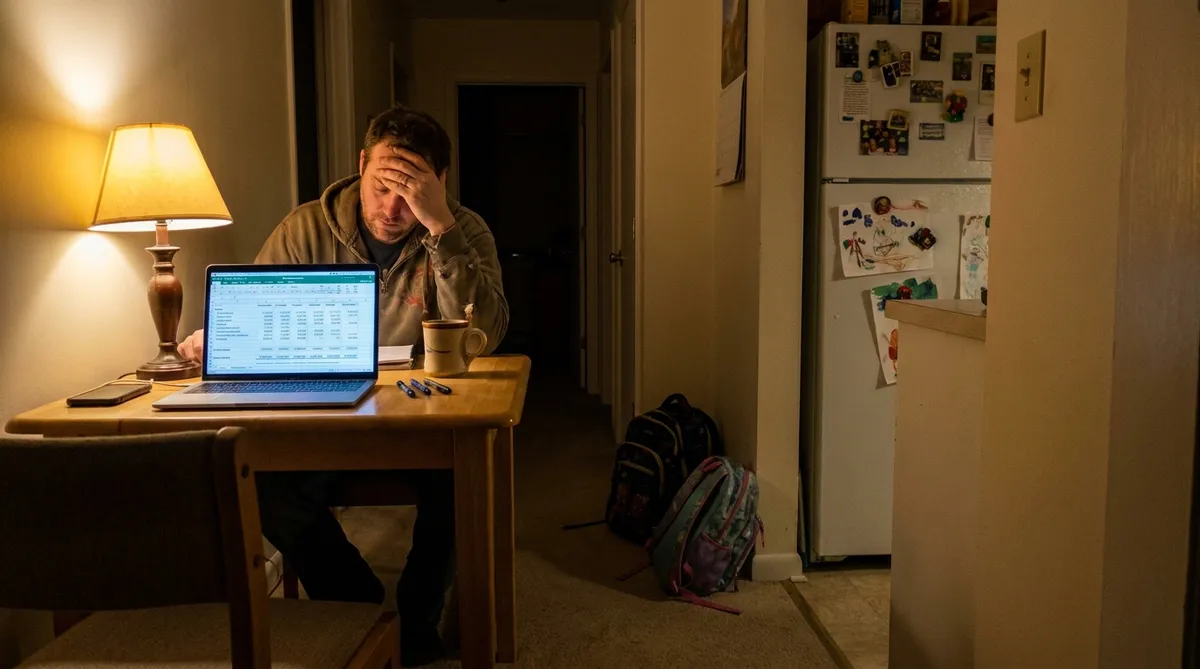
The system matters more than the split. Whether you do 50/50 or 60/40 or income-proportional, the consistency of tracking matters ten times more than the ratio. When both parents see the same numbers, arguments about "you never pay for anything" disappear. They get replaced by actual conversations about budgeting.
And planning changes everything. We used to get blindsided by September every single year. Now I can look back at last year and say "supplies will be around $400, field trips over the year will total $200, and after-school is $150/month." When you know the numbers, you stop reacting and start planning. That shift alone cut our arguments in half.
Stop guessing who owes what. Start tracking it. Try CoParentSplit free for 30 days and see exactly where your school expense money goes.
Related: Childcare Expenses After Separation: Who Pays for Daycare?
Ready to simplify co-parent expenses?
CoParentSplit makes it easy to track, split, and settle shared child expenses — no conflict required.
Start Free Now
Founder of CoParentSplit
Single dad of 3, product manager, and immigrant in Montreal. Built CoParentSplit after his own divorce because he needed a simpler way to split child expenses with his co-parent.