Is AppClose Free in 2026? No — Here's What It Costs
AppClose has no free plan: $7.99 a month per parent on the web, $8.99 in the app, or $83.88 a year, after a 60-day trial. What two parents pay, and the cheaper options.

No — AppClose is not free. It has no free plan: after a 60-day free trial, each parent pays $7.99 a month on the web, $8.99 a month if they subscribe inside the app, $83.88 a year prepaid, or $143.76 for two years (AppClose pricing, checked September 29 and October 12, 2026). Because every parent needs their own account, a co-parenting pair pays about $168–216 a year.
A correction: when we first published this article in August 2026 it said AppClose cost $0. That was wrong: AppClose's pricing page lists only paid plans. We rewrote it on September 29, 2026 from that page, and we're sorry to anyone it misled. On October 12, 2026 we also removed a date we had given for the end of AppClose's free plan (January 1, 2026), because AppClose's own pages don't state it.
I've spent two years splitting expenses for three kids with my ex, and I built a competing app, so treat me as biased and informed at the same time. Here is what AppClose costs now, what you get for it, and when it is still the right choice.
How much does AppClose cost in 2026?
One all-inclusive plan, priced per parent, after a 60-day trial with no card:
| AppClose plan | Price per parent | Per year, per parent | Per year, for two parents |
|---|---|---|---|
| Monthly, subscribed on the web | $7.99/month | $95.88 | $191.76 |
| Monthly, subscribed in the app | $8.99/month | $107.88 | $215.76 |
| Annual, prepaid | $83.88/year (≈ $6.99/month) | $83.88 | $167.76 |
| Two years, prepaid | $143.76 every two years (≈ $5.99/month) | $71.88 | $143.76 |
The in-app price is a dollar higher than the web price, so if you do subscribe, do it on appclose.com rather than through the App Store or Google Play.
AppClose also runs a fee-waiver program: parents in financial hardship and survivors of domestic violence can apply for a free, renewable one-year account. They report giving out more than 25,000 of them since the change. If that's you, apply — it's the same full plan. There's a military discount too.
Is AppClose free for both parents?
No. Pricing is per individual user, not per family, so each of you subscribes separately — the same model OurFamilyWizard and TalkingParents use. One of you can't cover the other the way a single CoParentSplit plan does.
That per-parent detail is the one that changes the math. A price that looks like $7.99 is really about $16 a month for the household.
What do you get for the money?
Everything the app does, with no tiers: messaging with timestamps, the shared custody calendar, expense entries with receipt photos, reimbursement requests, and file storage. AppClose's own words are "no limits or extra payments" — you either subscribe or you don't.
That makes it one of the more straightforward paid options. The question is only whether you'll use the parts you're paying for.
How does AppClose compare to OurFamilyWizard, TalkingParents and CoParentSplit?
Prices for two parents, per year, from each vendor's own pricing page on September 29, 2026:
| App | Charged per parent? | Cheapest option for two parents, per year | Expense tracking included? |
|---|---|---|---|
| CoParentSplit | No — one plan covers both | $59.99 (free tier available) | Yes |
| AppClose | Yes | $143.76 (two-year plan) – $167.76 (annual) | Yes |
| TalkingParents | Yes | about $155 (Essentials, $7/month each, billed annually) | Yes; in-app payments carry a 2–4% fee |
| OurFamilyWizard Basic | Yes | $220 | No — expenses start at Essentials |
| OurFamilyWizard Essentials | Yes | $299.98 | Yes |
The per-parent column is the one people miss. Every one of the big three bills each parent, and none of them has a free plan now: TalkingParents has required a paid subscription since March 30, 2026, and AppClose gives free accounts only through fee waivers for parents in financial hardship and survivors of domestic violence. I broke the full two-household math down in co-parenting app costs in 2026.
What costs does a pricing page never show you?
The expensive part of co-parenting software is adoption, not the subscription. An app your co-parent refuses to install costs you infinity dollars per month, because you're back to receipt photos in WhatsApp at 11pm, and every purchase turns into a negotiation. And now that AppClose is paid, "download this" also means "pay for this" — a harder ask of an ex who didn't want the app in the first place.
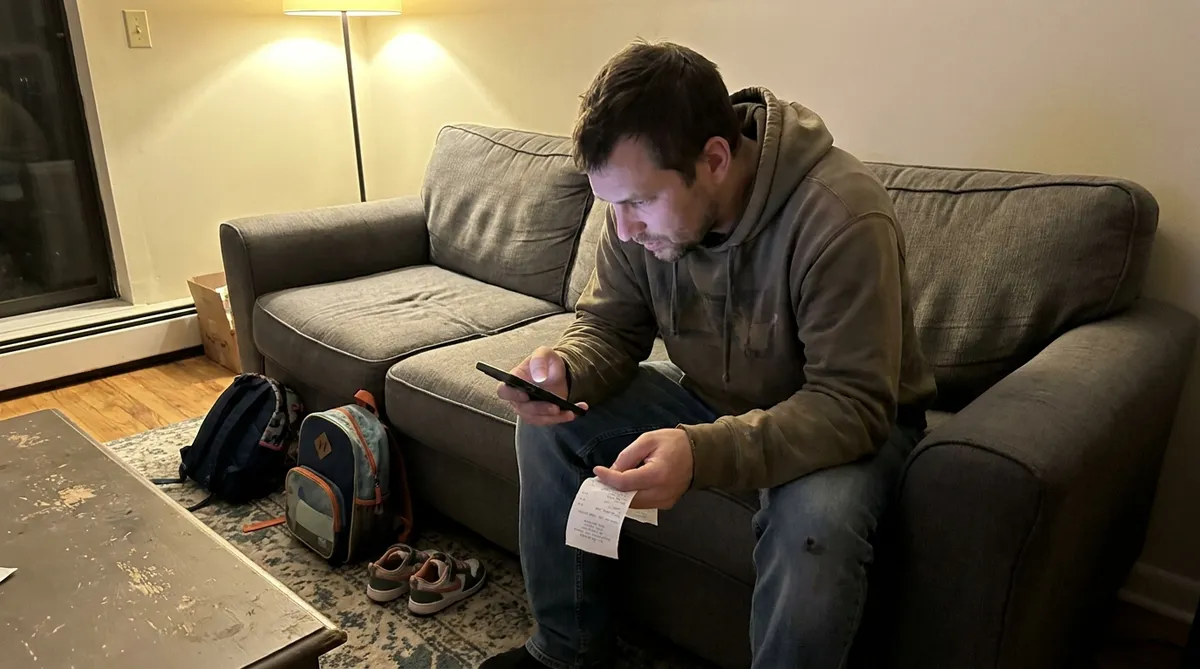
This is the thing I got wrong for a long time. I looked at OurFamilyWizard early on and the price wasn't even my first objection. The interface was. I knew, sitting there looking at it, that I would never get my ex to use that. Not because she's unreasonable, but because the ask was too big: download this, learn this, log in here, for a system she didn't request. So we kept doing what we'd been doing, which was sending receipt photos over WhatsApp and reminding each other who owed what until somebody got annoyed.
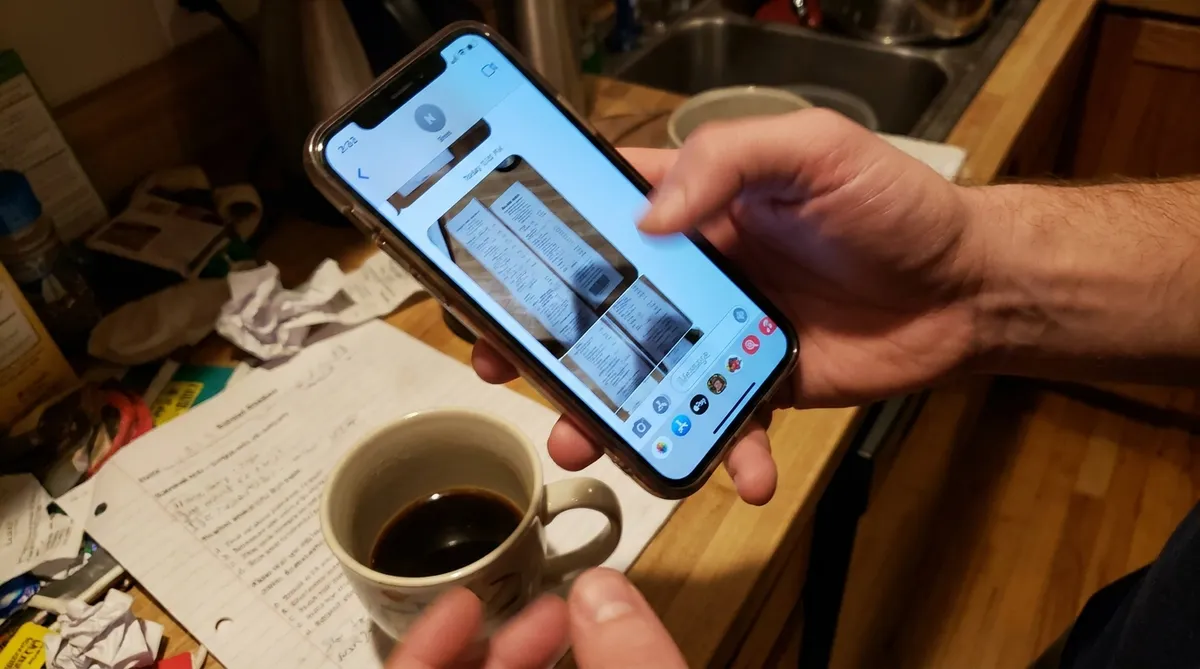
Here's what that actually cost me. Judo for my oldest was $130 a month. The private Saturday school was $260 split between us, until it hit the budget hard enough that we dropped it and moved him to a tutor. Summer camp ran $460. Water park tickets, $200. And after my son got hurt at judo, my ex told me she was done funding activities altogether. Her line was "I'm not going to pay for your impulsive purchases."
So I stopped asking. If I wanted to buy my youngest a toy or grab winter clothes for the kids, I paid for it myself and said nothing, because the argument cost more than the item. That's the invisible line on every pricing page: the silent-payment tax. It doesn't appear in any comparison table and it's the biggest number in the whole equation.
When I finally logged every expense properly, I found out I'd been paying well past half. Not slightly past. A lot. Years of small unlogged purchases had turned "we split 50/50" into something else entirely, and no amount of arguing had surfaced that. A neutral record did it in one month.
One plan, both parents
CoParentSplit is $6.99 a month for the pair — the second parent joins free — with a free tier and no card to start.
See how it worksIs AppClose still worth paying for?
It can be. If both of you already use AppClose every day — the messaging, the calendar, the whole platform — and it keeps the peace, $168 a year for the pair is less than OurFamilyWizard charges, and switching has its own cost. If you qualify for a fee waiver, it's free again for you.
Where I'd look at something else is if you hit one of three walls. One, you mainly opened AppClose to track shared expenses, and you'd now be paying two subscriptions for that. Two, your co-parent won't engage with an all-in-one app and you need a record that works from one side. Three, you don't want another inbox, because the messaging is where things go sideways for you.
That's the gap CoParentSplit was built for, at $6.99 a month or $59.99 a year for both parents, with a free tier to start. The feature-by-feature detail is in our AppClose vs CoParentSplit comparison. And if you're not ready to install anything, run your numbers through the free expense calculator first. No signup, no card.
Frequently Asked Questions
Is AppClose still free in 2026? No. AppClose has no free plan. After a 60-day free trial, each parent pays $7.99 a month on the web, $8.99 a month if they subscribe inside the app, $83.88 a year prepaid, or $143.76 for two years. Fee waivers exist for parents in financial hardship and survivors of domestic violence: AppClose says it has given over 26,450 free accounts since January 1, 2026.
How much does AppClose cost for two parents? Each parent needs their own subscription, so a co-parenting pair pays twice: $167.76 a year on annual plans, $191.76 a year month-to-month on the web, or $215.76 a year month-to-month in the app. The two-year plan works out to $143.76 a year for the pair.
Does AppClose have a free trial? Yes, 60 days with every feature and no credit card. After that a paid plan is required unless you qualify for a fee waiver.
What does the AppClose subscription include? One all-inclusive plan: messaging, the shared calendar, expense logging with receipts, reimbursement requests and file storage. There are no feature tiers — you either subscribe or you don't.
Is AppClose cheaper than CoParentSplit? No, not any more. CoParentSplit is $6.99 a month or $59.99 a year for one plan that covers both parents, against at least $167.76 a year for two AppClose subscriptions. CoParentSplit also keeps a free tier (10 expenses a month, one child, your full history). AppClose includes messaging, which CoParentSplit does not.

The number that actually matters
Forget the subscription line for a second. Add up what you spent on your kids last month and figure out what percentage of it you actually carried. If you don't know that number, no pricing comparison helps you, because you can't tell whether a subscription is buying you anything.
That's the number that changed things for me. Not the app fee. The gap between what I thought I was paying and what I was.
Stop fighting about money. Start tracking it. Try CoParentSplit free and log one real month of expenses. If AppClose does the job better for your family, use AppClose, and I mean that. Just pick something and use it every single time.
Related: AppClose vs CoParentSplit: Honest Feature Comparison (2026) · Best Co-Parenting Expense Apps 2026
Ready to simplify co-parent expenses?
CoParentSplit makes it easy to track, split, and settle shared child expenses — no conflict required.
Start Free Now
Founder of CoParentSplit
Single dad of 3, product manager, and immigrant in Montreal. Built CoParentSplit after his own divorce because he needed a simpler way to split child expenses with his co-parent.