Co-Parenting App Costs in 2026: What Each One Charges Both Parents
Co-parenting app costs in 2026, priced for two households: OurFamilyWizard $220-$600, TalkingParents $168-$768, AppClose $0, CoParentSplit $59.99 for both.

Every co-parenting app pricing page quietly assumes you're the only customer. You're not. The app only works when your ex has an account too, and for most of these tools that second account is a second bill. This post prices every major app the way a household actually pays for it: two parents, one year, all fees included.
I've been splitting costs for three kids with my ex since our 2023 divorce in Montreal, and I built one of the apps below. So read the CoParentSplit row knowing that. The rest of the numbers come from each vendor's own pricing page, and I'll tell you when I checked.
What do co-parenting apps cost for two parents in 2026?
For a two-parent household, the real annual range in 2026 runs from $0 (AppClose) to $768 (two TalkingParents Ultimate seats). OurFamilyWizard sits at $220 to $599.76 depending on tier. CoParentSplit is $59.99 for both parents on one plan. Every price below is doubled where the vendor bills per parent.
| App | Listed price | Billed per parent? | Both parents, per year | Money-transfer fee |
|---|---|---|---|---|
| AppClose | Free | No | $0 | Processor fee on AppClosePay only |
| CoParentSplit | $6.99/mo or $59.99/yr | No, one plan covers both | $59.99 | None (doesn't move money) |
| TalkingParents Essentials | $7/mo | Yes | $168 | 4% |
| OurFamilyWizard Choose Your Own | $110/yr | Yes | $220 | n/a |
| OurFamilyWizard Essentials | $149.99/yr | Yes | $299.98 | n/a |
| TalkingParents Enhanced | $16/mo | Yes | $384 | 3% |
| OurFamilyWizard Premium | $216/yr | Yes | $432 | n/a |
| OurFamilyWizard Max | $299.88/yr | Yes | $599.76 | n/a |
| TalkingParents Ultimate | $32/mo | Yes | $768 | 2% |
| Shared spreadsheet | Free | No | $0 | n/a |
Sources and dates: OurFamilyWizard figures are from their pricing page, verified March 2026. TalkingParents figures are from their pricing page as of late August 2026, monthly billing (annual billing takes 8% off). AppClose has been free for parents since 2015. If you're reading this in 2027, re-check before you enter a card. These companies change tiers more often than you'd think.

Why does the per-parent price double your bill?
OurFamilyWizard and TalkingParents sell seats, not households. Each parent needs their own login for the timestamped record to hold up, so each parent pays. That's a defensible product decision for court-grade documentation. It also means the number you see on the pricing page is half of what your family will spend.
Take OurFamilyWizard Premium. The page says $216 a year. Your household pays $432, and if your ex won't buy in, you're paying $432 yourself or running a system that logs half the story. TalkingParents Enhanced looks like $16 a month until you add your co-parent's $16 and land at $384 a year.
There's a second wrinkle with TalkingParents: since March 30, 2026 there's no free plan at all. Before that date one parent could sit on the free tier while the other paid. Now both need a subscription just to exchange messages, so the entry price for a household is $14 a month minimum. I went through those tiers line by line in TalkingParents vs CoParentSplit.
Both companies soften this. OurFamilyWizard's checkout lets one parent pay for the other's account, and both run fee-waiver programs for parents who qualify through a court, legal aid clinic, or a documented hardship. Worth asking about. Worst case you hear no.
What do the free apps actually cost?
AppClose is free for parents with no feature gate: unlimited messaging, a shared calendar, expense entries with receipt photos, reimbursement requests. The only money that ever changes hands is a processor fee when you move dollars through AppClosePay. CoParentSplit's free tier covers 10 expenses a month, 1 child, and 30 days of history, and a spreadsheet is free forever.
I want to be careful with the word "free," because it usually hides one of three things.
Processor fees. AppClose makes money on the professional side (attorneys, mediators) and on payment processing. When you send your ex $200 for daycare inside the app, a fee appears on the confirmation screen. Rates shift, so I'm not quoting a percentage. Look at the screen every time, or skip the feature and pay by Interac e-transfer or Zelle. The full breakdown is in AppClose pricing 2026.
Ad-supported tiers. Cozi's free family calendar is paid for by ads, and its Cozi Gold upgrade removes them for a fee I haven't verified this year. It's a scheduling tool anyway, not a ledger. Splitwise has a free tier plus a paid Pro plan (also unverified this year), and it splits dinner bills well but has no idea what custody is.
Caps. CoParentSplit's free plan is a real cap. Ten expenses a month sounds like a lot until September hits. Last year I logged school supplies, two pairs of running shoes, a $460 summer camp balance, and a dentist bill in the same week. That's the point of the cap: it's enough to find out whether your co-parent will actually open the thing, and not enough to run three kids on indefinitely.
What does CoParentSplit charge both parents?
CoParentSplit is $6.99 a month or $59.99 a year, and one subscription covers both parents. The paying parent invites the other, who joins at no cost. There's no per-parent seat, no fee on the amounts you log, and no export charge. It doesn't move money, so there's nothing to skim a percentage from.
The one-plan pricing isn't a marketing trick. It exists because of a specific wall I hit.
I couldn't get my ex to pay for a co-parenting tool. Not $16, not $7, not $3. When we separated in 2023, I looked at OurFamilyWizard and put my phone down for two reasons: the interface felt built for lawyers, and I knew with total certainty that asking her to download it and enter her own card would end the conversation. So we did what most people do. WhatsApp. A photo of every receipt as proof I'd actually bought the thing. Then a reminder. Then "what was that for again?" Then me explaining why our kids needed pencils in September.
If your co-parent has to pull out a credit card before the system starts, the system never starts. One payer, two logins, was the only way I could see it working in my own house. That's the whole reason for the pricing model.
What you don't get, and I want this on the record: no messaging, no call recording, no tone checker, no court-formatted PDF of your conversations. If a judge needs to read what your ex texted, you need one of the documentation apps above, or both. See the plan details before you decide.
Which app is worth paying for in your situation?
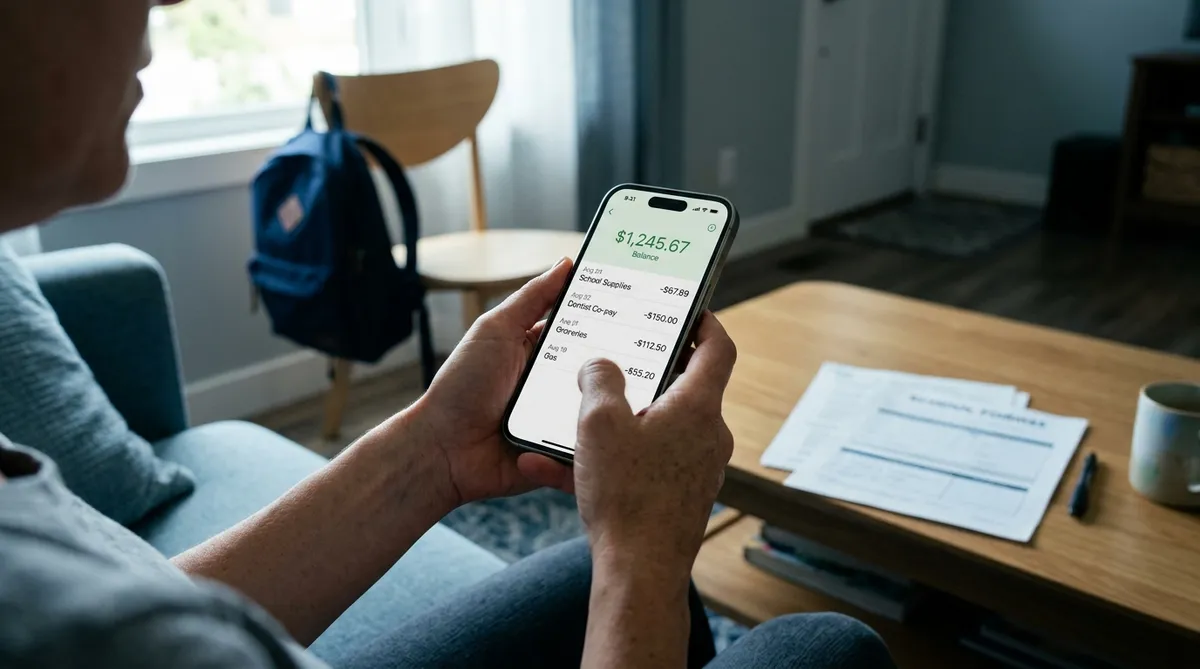
Pay for a documentation app when your fights are about words: denied agreements, "I never got that message," a custody hearing on the calendar. Pay for an expense app when your fights are about a $180 receipt sent with no context. Pay nothing when both of you will genuinely open a free app every week.
Here's how I'd sort it, as someone who's spent money on the wrong tool before.
A judge is involved, or will be. Buy OurFamilyWizard or TalkingParents and stop reading price comparisons. In Canada, section 7 of the Federal Child Support Guidelines treats childcare, medical bills, and extracurriculars as special expenses shared in proportion to income, and when those numbers get argued in front of someone in a robe, the quality of your record matters more than $300. The full two-parent math is in OurFamilyWizard pricing 2026.
Communication is the hazard. If every text from your ex spikes your heart rate, $168 a year for two TalkingParents Essentials seats to route everything through a monitored channel is cheap. I mean that.
Money is the hazard, and you can still talk. This was me. My ex and I could coordinate pickups fine. What we couldn't do was agree on whether judo at $130 a month counted as a shared cost. After my oldest got hurt at practice, her position hardened into no activities at all: not judo, not swimming, nothing. Her exact words were "I'm not paying for your impulsive purchases." A class my kid had asked about for a year. I kept paying alone, the way I'd already been paying $260 for Saturday private school for two kids, until that bill broke the budget and we swapped it for a tutor.
For that situation, a $59.99 ledger both parents can see did more than any $600 court tool would have. And the first thing it exposed was my own number. Once every purchase was logged the same day, I could see I'd been paying well past half for two years, because quietly absorbing the $40 haircut and the $60 pharmacy run had felt cheaper than the argument. Nobody was lying. Nothing was written down.
Both of you will actually use a free app. Then use AppClose and spend the money on the kids. Free and used beats paid and ignored, and it costs me sales to say so.
Ready to simplify co-parent expenses?
CoParentSplit makes it easy to track, split, and settle shared child expenses — no conflict required.
Start Free NowHow do the hidden costs compare?
The subscription is the smallest line in the real budget. The bigger ones are transaction fees on money you'd be moving anyway, the price of features you'll never open, and the silent cost of purchases nobody logs because logging them means a fight.
Run the fee math on an ordinary family. Say $500 a month flows between you and your ex for daycare, sports, and school. Push that through TalkingParents Accountable Payments on Essentials at 4% and you're paying $20 a month, $240 a year, on top of two subscriptions, to send your own money. On Ultimate the fee drops to 2%, but you're paying $32 a month each to get there. AppClosePay carries a processor fee too. The workaround for all of them is the same: bank transfer, then log the payment as a note.
Then there's paying for the wrong features. Two OurFamilyWizard Premium seats at $432 buy ToneMeter, court-formatted exports, and free attorney access. If nobody in your life needs those, you've spent $372 more than a $59.99 expense plan for features that will sit unopened. The reverse is also true: if you buy an expense tracker when you needed evidence, the cheap app cost you the case.
And the silent-payment tax, the one no pricing page lists. It's the $200 water-park tickets I bought and never mentioned. It's every winter jacket I paid for alone to avoid "was that necessary?" It doesn't appear in any table above, and in my house it was the largest number in the whole equation. Whichever app you pick, the only way to kill that cost is to log every expense the same day, in a place both of you see, before it becomes a conversation.

Frequently Asked Questions
How much do co-parenting apps cost per year for both parents in 2026? For two parents, OurFamilyWizard runs $220 to $599.76 a year depending on tier, TalkingParents runs $168 to $768 on monthly billing, AppClose is $0, and CoParentSplit is $59.99 a year on one plan that covers both households. Most vendors quote a per-parent price, so double it before comparing.
Which co-parenting apps charge each parent separately? OurFamilyWizard and TalkingParents both bill per parent, so every tier price on their pages is really half the household cost. AppClose is free for both. CoParentSplit charges one subscription, $6.99 a month or $59.99 a year, and the second parent joins by invite at no extra cost.
Is there a completely free co-parenting app in 2026? AppClose is the only full-featured co-parenting app that's still free for parents with no paid tier. TalkingParents dropped its free plan on March 30, 2026. CoParentSplit has a free tier limited to 10 expenses a month, 1 child, and 30 days of history, which is enough to test whether your co-parent will use it.
Do co-parenting apps charge fees to send money? Some do. TalkingParents takes 2% to 4% per transaction through Accountable Payments depending on your plan, and AppClose charges processor fees on AppClosePay transfers. Neither fee is in the subscription price. You can avoid both by paying each other with a bank e-transfer and logging the payment in the app.
What's the cheapest way to track child expenses with an ex? A shared spreadsheet costs nothing, and AppClose costs nothing if both parents install it. If you want automatic split math and reminders without paying per parent, CoParentSplit at $59.99 a year for both households is the lowest-cost paid option, roughly a seventh of OurFamilyWizard Premium for two.
The one number to check before you buy anything
Before you compare a single subscription, add up what you spent on your kids last month and work out what share of it you actually carried. If you don't know that number, no pricing table can tell you whether $0, $59.99, or $432 is buying you anything. The free expense calculator will do it from a month of real receipts in about five minutes, no signup.
That number changed things for me more than any app fee did. Not what the tool cost. The gap between what I thought I was paying and what I was.
Stop fighting about money. Start tracking it. Try CoParentSplit free: 10 expenses a month, no card, and your co-parent joins at no extra cost. If a free app or a spreadsheet does the job in your house, use that instead. Just pick one and log every receipt, every time.
Related: OurFamilyWizard Pricing 2026: The Full Cost for Both Parents · AppClose Pricing 2026: What's Actually Free · Best Co-Parenting Expense Apps 2026
Ready to simplify co-parent expenses?
CoParentSplit makes it easy to track, split, and settle shared child expenses — no conflict required.
Start Free Now
Founder of CoParentSplit
Single dad of 3, product manager, and immigrant in Montreal. Built CoParentSplit after his own divorce because he needed a simpler way to split child expenses with his co-parent.