Daycare vs Babysitter Costs: How Co-Parents Should Split Childcare
Daycare or a babysitter? See real 2026 costs, who pays what after divorce, and how co-parents can split childcare without the monthly fight.

My youngest is 5. For two years he was in daycare while my two older kids were in school, and I remember staring at the monthly daycare invoice thinking at least this one is simple. The daycare billed each parent separately. No arguing, no receipts, no "why did you sign him up for that." Then came a summer where daycare closed for two weeks and we needed a babysitter, and suddenly we were right back to the same fight we have about everything else.
That gap is what this post is about. Daycare and babysitters look like the same thing on your budget line, but they behave completely differently when you're splitting costs with someone you're no longer married to.
Daycare vs babysitter: what's the real cost difference in 2026?
Licensed daycare is almost always cheaper per hour than a private babysitter. As of mid-2026, daycare ranges from about $10 a day in subsidized systems like Quebec's reduced-contribution program to $50 or $60 a day for private centers in most US metros. A babysitter charges $15 to $22 an hour, so a single 8-hour day can cost $120 or more. Daycare is the value option for regular, full-time care.
But price per hour isn't the whole story. Daycare is predictable: a fixed monthly rate, a real invoice, a schedule. A babysitter is flexible but messy. Cash or e-transfer, no paper trail, and the hours change week to week.
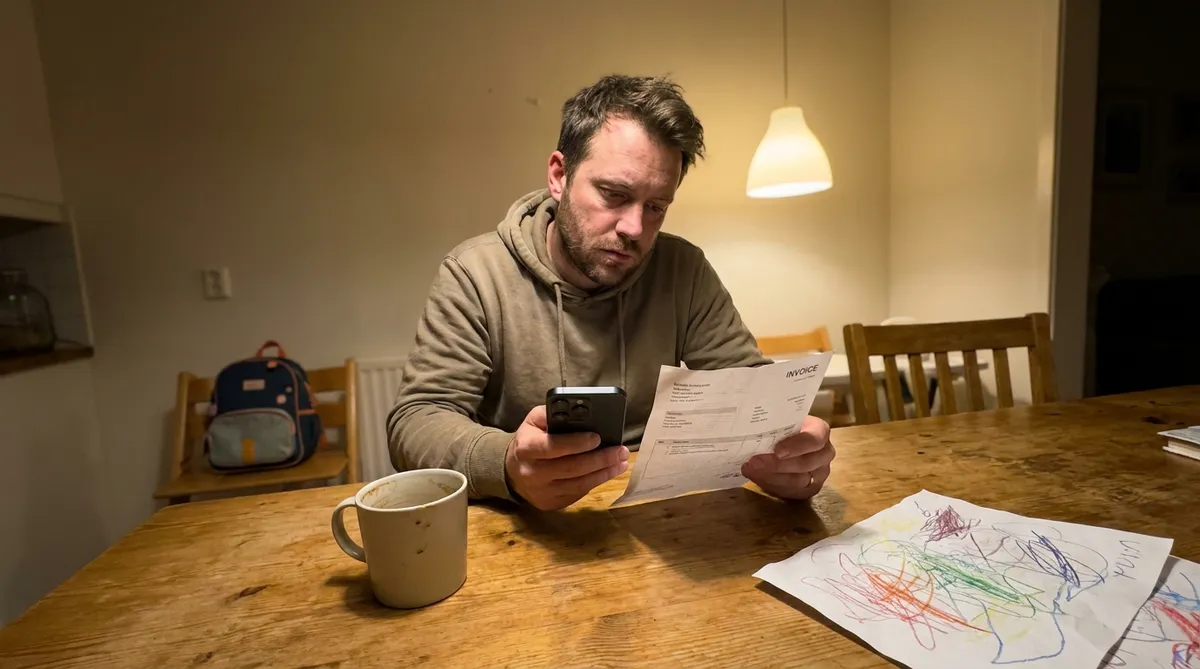
Here's the part nobody warns divorced parents about. Daycare centers can usually bill each parent directly. When my kids' daycare and school split the invoice between me and my ex, it removed an entire category of arguments. Each of us paid our half straight to the institution. Nobody had to "remind" anybody. That's the single biggest financial relief I've had since the divorce, and it had nothing to do with the amount. It had to do with who I had to talk to about it.
A babysitter doesn't work that way. One of you hires them, one of you pays them, and then you have to go back to the other parent and split it. Which means you're back to receipts, back to "was that necessary," back to the exact conversation you were trying to avoid.
Who pays for daycare after separation?
In most US states and Canadian provinces, work-related daycare is treated as a mandatory add-on to child support, split between parents in proportion to their incomes. It isn't optional and it isn't lumped into the base support number. If a parent needs childcare in order to work, the other parent generally shares that cost. Check your specific order, because the wording matters.
The keyword there is work-related. Courts draw a hard line between "care that lets a parent hold a job" and "care so a parent can go to dinner." The first is almost always splittable. The second usually isn't.
This distinction saved me a lot of confusion. When my son was in daycare so I could be at work, that was a shared, non-negotiable expense, and my ex agreed, because the system (school, daycare) sent us each a bill anyway. There was nothing to debate. The US Office of Child Support Services and provincial family-law guidelines both treat licensed work-related care as a standard support add-on, so if you ever end up in front of a mediator, you're on solid ground.
If you want the deeper breakdown of who's legally on the hook, we wrote a full guide on childcare expenses after separation and who pays for daycare. Read that one before your next mediation session.
When does a babysitter count as a shared expense?
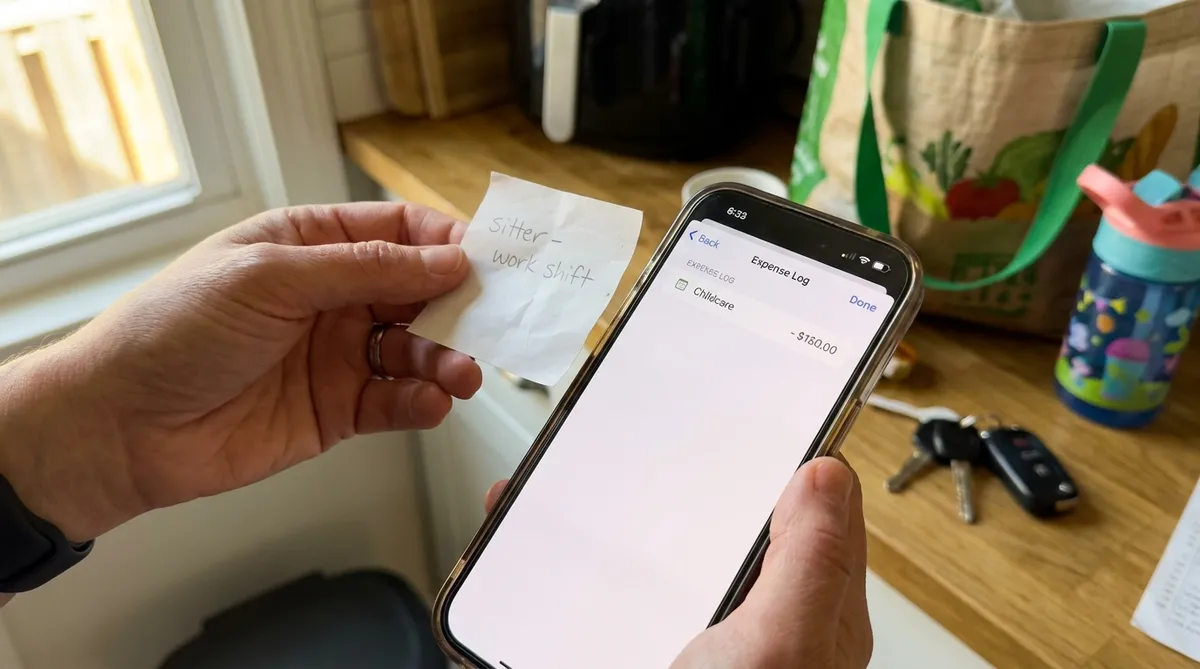
A babysitter is a shared expense when the care covers a shared need: a work shift, a medical appointment, an overlap during a custody exchange. It's usually not shared when one parent hires a sitter during their own parenting time so they can go out. The test is the same as daycare. Does the care exist so a parent can meet an obligation, or a preference?
This is where most co-parents get stuck, and I've lived it. During that two-week daycare closure I mentioned, I hired a sitter so I could work. To me that was obviously a work expense, same as daycare, just a different provider. My ex saw a cash payment to a teenager with no invoice and asked why she should pay for "my" babysitter.
She wasn't being unreasonable, honestly. There was no paper trail. I'd paid $18 an hour in e-transfers with no note attached. From her side it looked like a discretionary choice I'd made on my own. The care was legitimate. The documentation was garbage.
That's the real lesson. A babysitter can absolutely be a shared expense, but only if you treat it like one from the first minute. Agree it's for a shared need, log it the same day, and note why the care was needed. Do that and it's no different from a daycare invoice. Skip it and you've handed your co-parent a reason to say no.
How should co-parents split daycare and babysitter costs?
Most agreements split childcare either 50/50 or in proportion to each parent's income. Proportional splitting is more common when incomes are very different. If you earn 65% of the household total, you pay 65% of daycare. Whatever the ratio, the rule that actually prevents fights is simpler: agree on the categories before the expense happens, not after.
Here's what I'd tell any divorced parent, and it's the thing I got wrong for a full year.
Decide in advance which childcare is automatic and which needs a conversation. Full-time daycare and after-school care? Automatic, split by your agreed ratio, no discussion needed each time. A one-off babysitter so a parent can attend a wedding? That's on the parent who's going out. Put those two buckets in writing and you eliminate the weekly negotiation.
My ex and I try to split everything 50/50. But when I started logging every single expense in our tracker, I found out I'd quietly been paying way more than half, because I never even bothered to log the small stuff. The $18 sitter here, the $40 for the neighbor's kid to watch mine there. I just paid it to avoid the argument. Multiply that by two years and it's a real number.
That's the trap. Avoiding the conversation feels cheaper because you skip the stress. Financially, it costs you a fortune. The parent who hates conflict ends up subsidizing the whole arrangement, and never sees it because the money leaks out $20 at a time.
If you want to see what a fair split actually looks like for your incomes, run the numbers through our free expense calculator before you agree to anything.
Ready to simplify co-parent expenses?
CoParentSplit makes it easy to track, split, and settle shared child expenses — no conflict required.
Start Free NowWhat's the cheapest way to track childcare costs between two homes?
The cheapest tool is a shared spreadsheet, and it works fine until someone forgets to update it and a $40 haircut turns into a three-day text battle. The next step up is a dedicated tracker that logs the expense, splits it by your ratio automatically, and notifies the other parent. The point isn't the software. It's removing the "reminder" conversation, because that conversation is where the fights start.
I'll be straight with you: I tried to get my ex onto OurFamilyWizard early on and it went nowhere. The interface felt heavy, and there was no way I was convincing her to learn a complicated app. It also costs around $300 a year, per parent. That's roughly $600 total just to log who bought daycare snacks. For most co-parents who only need to track shared expenses, it's more than the problem requires. (I broke down the cheaper options in our OurFamilyWizard alternatives post if you're comparing.)
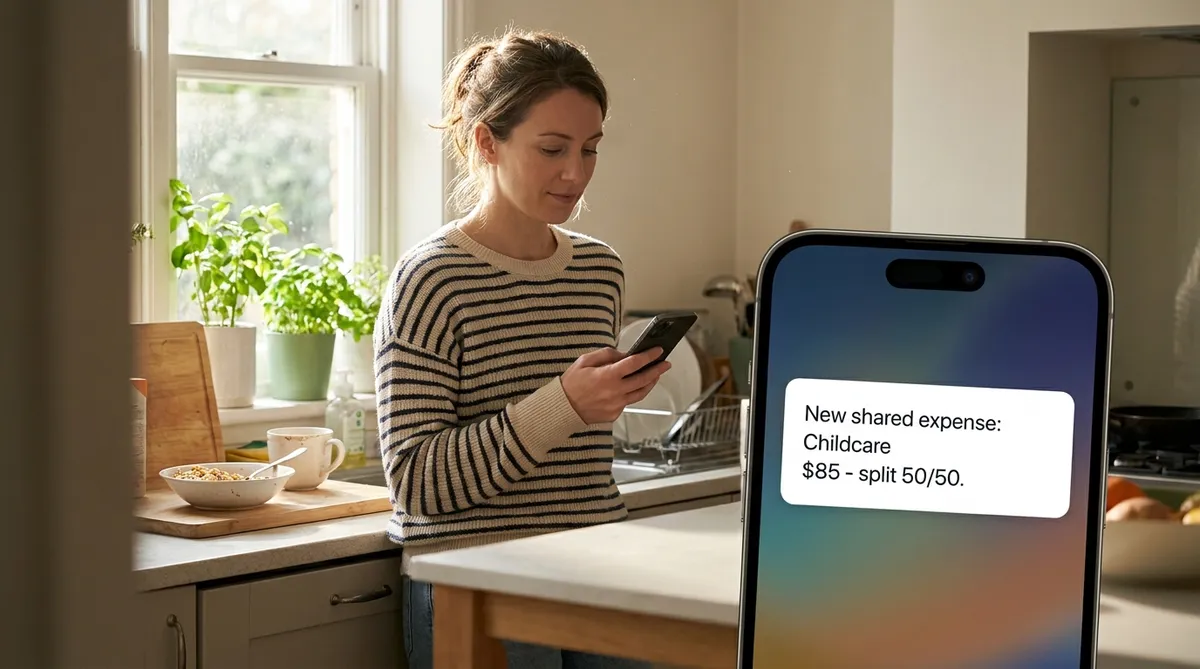
What changed things for us wasn't a fancy feature. It was that childcare finally had one home. When the daycare bills split automatically, and the occasional sitter got logged the same day with a note, my ex stopped asking "why," because the answer was already sitting right there in the entry. The system carried the awkward part so I didn't have to.
Daycare vs babysitter: which should co-parents choose?
For regular, work-related care, daycare is the better call for divorced parents. Not just because it's cheaper per hour, but because it bills each of you directly and leaves a clean paper trail neither of you can argue with. A babysitter makes sense for flexible, occasional needs, but only if you document it like a real shared expense the day it happens.
The money question is almost never really about the money. It's about the communication around the money. Daycare removes the communication entirely, which is why it feels so much easier. A babysitter puts the communication back on you, so you have to build a little system to carry it.
After two years and three kids, here's my honest takeaway. Pick the care that fits your kids' actual needs, then decide the split before the bill arrives. Log every dollar the same day. Don't argue over anything under $20. And never, ever have the money conversation at custody exchange, because the kids hear everything.
Frequently Asked Questions
Is daycare or a babysitter cheaper for co-parents? Licensed daycare usually costs less per hour, roughly $10 to $60 a day depending on your province or state and subsidies. A private babysitter runs $15 to $22 an hour, so a full day often tops $120. Daycare wins on price for full-time care; babysitters win for occasional evenings.
Do both parents have to pay for childcare after divorce? Usually yes. Work-related childcare is a recognized shared expense in most custody agreements and gets split, often proportional to income or 50/50. The parent who needs care to work can't be forced to cover it alone. Check your court order for the exact wording.
How do you split babysitter costs when only one parent hires them? Log the cost the day it happens, note it was for shared parenting time or a work shift, and split it per your agreement. Problems start when one parent hires a sitter for a date night on their own time, which usually isn't a shared expense. Agree on that line in advance.
Is daycare a mandatory shared expense or an add-on? In most US states and Canadian provinces, work-related daycare is treated as a mandatory add-on to base child support, split by income share. Discretionary care, like a sitter so one parent can go out, is not. The distinction is whether the care lets a parent work.
Stop fighting about money. Start tracking it. Try CoParentSplit free for 30 days: log daycare and babysitter costs in seconds, split them automatically, and let the app have the awkward conversation for you.
Related: Childcare Expenses After Separation: Who Pays for Daycare · How to Handle Unexpected Child Expenses With Your Co-Parent
Ready to simplify co-parent expenses?
CoParentSplit makes it easy to track, split, and settle shared child expenses — no conflict required.
Start Free Now
Founder of CoParentSplit
Single dad of 3, product manager, and immigrant in Montreal. Built CoParentSplit after his own divorce because he needed a simpler way to split child expenses with his co-parent.