DComply vs OurFamilyWizard vs CoParentSplit: An Honest Three-Way Comparison
DComply, OurFamilyWizard, and CoParentSplit compared on 2026 price, expense splitting, court records, and the one thing that decides it: co-parent buy-in.

Three apps, three completely different bets on what co-parents actually need. DComply bets you only care about money. OurFamilyWizard bets you're heading to court. CoParentSplit bets the hard part is getting your ex to open the thing at all.
I've been splitting expenses for three kids with my ex since our 2023 divorce in Montreal. I've paid for judo, private school, summer camp, dentists, and winter boots, and I've had the receipt argument more times than I can count. Below is how these three compare on price, on expense splitting, on court records, and on the one thing nobody's pricing page mentions.
What's the actual difference between DComply, OurFamilyWizard, and CoParentSplit?
DComply is an expense-and-payment app with in-app ACH transfers. OurFamilyWizard is a full co-parenting record: messages, calendar, expenses, and exports built for family court. CoParentSplit does one job, shared child expenses, on one plan that covers both parents. The gap between them is scope, and scope is what you're paying for.
| DComply | OurFamilyWizard | CoParentSplit | |
|---|---|---|---|
| Core focus | Expenses + in-app payments | Full co-parenting record | Shared child expenses |
| Listed price | $2.99/mo Basic, $5.99/mo Premium | $110–$299.88/yr per parent | $6.99/mo or $59.99/yr |
| Covers both parents on one plan | Yes, if one parent only pays or views bills | No (per account) | Yes |
| Free option | 7 bills, then free if you only pay bills | None for parents | 10 expenses/mo, 1 child |
| Messaging log | Not its focus | Yes, timestamped, court-ready | No |
| Shared calendar | Not its focus | Yes | No |
| Court-recognized reputation | Limited | Strong | Expense reports only |
| Money moves inside the app | Yes, ACH on Premium | Yes | No, you settle however you already do |
Price figures: OurFamilyWizard from its pricing page, verified March 2026; DComply from its pricing page, checked September 2026.
One thing worth spelling out, because it changes the math: DComply's free tier isn't only a trial. The parent who sends bills pays. The parent who only pays or views bills stays free indefinitely, and DComply's pricing page says so outright: "if you have a co-parent that only makes payments make sure to tell that parent DComply will be free to them." So a household where one parent does all the logging can run it on one subscription. If you both want to send bills, you both pay.
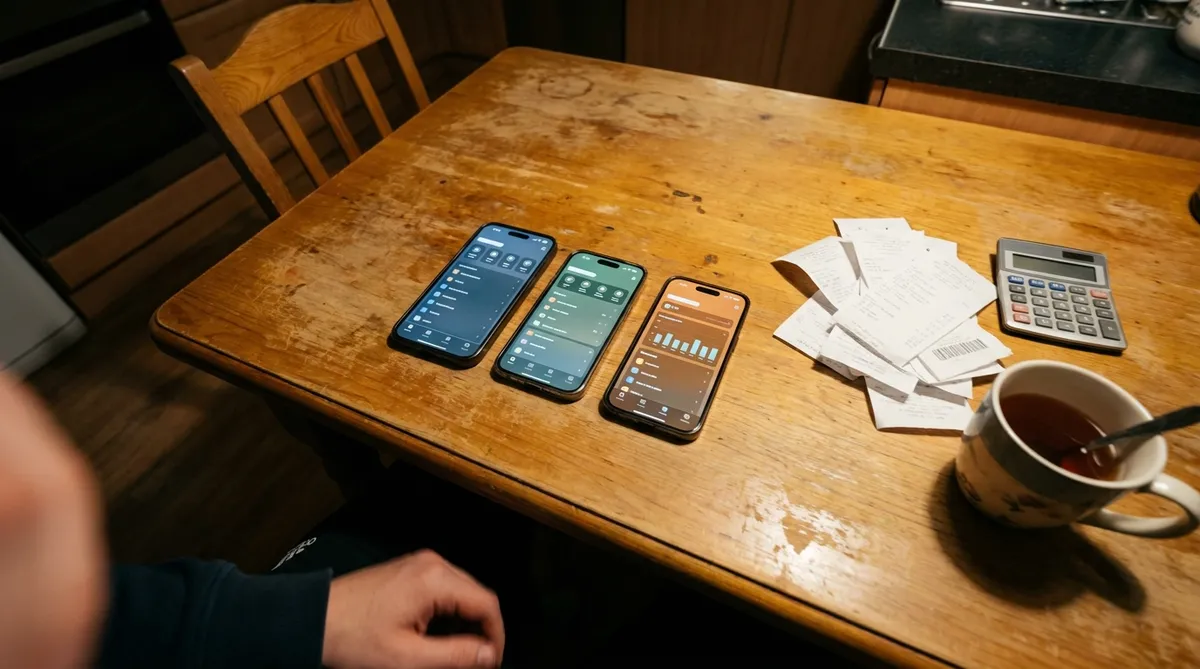
How much does each one cost for both parents in 2026?
For a two-parent household, OurFamilyWizard lands between $220 and roughly $600 a year depending on tier. DComply runs about $36 or $72 a year for the parent who sends bills, and nothing for a co-parent who only pays or views them. CoParentSplit is $59.99 a year total, covering both parents.
| Scenario | DComply | OurFamilyWizard | CoParentSplit |
|---|---|---|---|
| One bill-sender, per year | ~$36–$72 | $110–$299.88 | $59.99 |
| Both parents sending bills | ~$72–$144 | $220–$599.76 | $59.99 |
| Cheapest usable free version | 7 bills, then free to pay-only | None | 10 expenses/mo |
DComply wins the sticker-price contest outright, and I'm not going to pretend otherwise. If your entire requirement is "log a bill, split it, send money," it's the cheapest paid option of the three and it moves the actual dollars, which neither of the others does.
The catch is who has to stay passive for that price to hold. DComply's free seat is for a parent who only pays or views bills, so the cheap version assumes one of you does all the logging. If you both want to send bills, Premium for two is $143.76 a year. And seven bills is about three weeks in my house. Back-to-school alone burns through it, which I wrote about in our back-to-school expense guide.
If you want the full field rather than these three, I ran every major app's two-parent math in co-parenting app costs in 2026, including AppClose, which is free, and TalkingParents.
Which one is actually best at splitting expenses?
All three log an expense, attach a receipt, and calculate a balance. DComply adds ACH payment inside the app. OurFamilyWizard adds the expense log to a bigger record. CoParentSplit adds nothing else on purpose, which is why its expense screen is the one I'd hand to a reluctant co-parent without a tutorial.
DComply's payment feature is genuinely useful and I don't want to undersell it. Money that moves inside the app is money with a timestamp, and "I sent it" arguments end instantly. If you and your co-parent are both in the US with linked bank accounts, that's a real advantage.
It didn't help me. I'm in Quebec, we settle with Interac e-Transfer between two banks that already work fine, and the payment rail was never the broken part. The broken part was the negotiation before the payment.
OurFamilyWizard's expense log is thorough and pulls in reimbursement requests, categories, and exports. It's also one module in an app with a message center, a calendar, a journal, and an info bank. I tried it. The features are solid. But every extra module is another thing to explain to someone who didn't want to install an app in the first place. I broke down the full two-parent cost in OurFamilyWizard pricing 2026 and the feature trade-offs on our OurFamilyWizard comparison page.
The category problem all three share
None of these tools decides whether an expense is legitimate. That's a legal and personal question, not a software one. In Canada, extraordinary expenses for things like sports and tutoring fall under section 7 of the Federal Child Support Guidelines, and the Department of Justice Canada publishes what qualifies. Most US states have an equivalent add-on expense rule.
Read your own agreement before you argue with your co-parent about a $130 judo bill. A tool that says "you owe $65" doesn't win that argument. A court order that says extracurriculars are shared does.
Which one holds up in court?
OurFamilyWizard, and it isn't close. Its message log is timestamped, unalterable, and familiar to family lawyers and judges across North America. DComply exports expense and payment reports, which covers the money trail. CoParentSplit exports expense reports too, and stops there by design.
If a judge ordered you to use a specific app, this comparison is over. Use that app. If your case is in active litigation and your fights are about what was said, not what was spent, OurFamilyWizard's $432-a-year Premium tier for two parents is buying you evidence, and evidence is worth more than $432.
If your fights are about a $180 receipt for glasses, you're paying court-grade prices for a bookkeeping problem.

Will your co-parent actually use it?
This is the question that decides the outcome, and no pricing page asks it. A tool that logs half your expenses produces a ledger that argues against you. Adoption beats features, and adoption is mostly a function of how little the other parent has to learn and how little they have to pay.
I'll be straight with you about how this went for me. Before any app, we used WhatsApp. I'd buy school supplies or winter clothes for three kids, photograph the receipt, send it, and then wait. She'd ask what it was for. I'd explain. Then I'd remind her about the balance. Then we'd fight. Somewhere in there I started paying for things quietly, because paying $40 myself was cheaper than the conversation about why our son needed a new coat.
The judo bill is the one that broke it. Judo for my eldest was $130 a month, and he'd asked for a year before I signed him up. Then he got injured at practice, and my ex told me she wasn't paying for activities anymore, any of them, not judo, not swimming. Before that I was already covering private school on my own, $260 a month for two of them, until it hit the budget hard enough that we dropped the Saturday classes and switched to a tutor. Summer camp was $460. Waterpark tickets, $200. Her line, more or less verbatim: "I'm not going to pay for your impulsive purchases."
I never seriously considered OurFamilyWizard after that, and the reason had nothing to do with the $432. I knew I couldn't get her to use it. The interface asked too much of someone who hadn't agreed there was a problem to solve. That's the whole reason CoParentSplit exists as one plan covering both parents: there's no second subscription to sell her, no seat to approve, no separate card to enter. Whether that's the right trade for you depends entirely on whether your co-parent is cooperative, indifferent, or hostile.
Ready to simplify co-parent expenses?
CoParentSplit makes it easy to track, split, and settle shared child expenses — no conflict required.
Start Free NowSo which one should you pick?
Match the tool to your actual fight, not to the feature list. Court battle over communication, pick OurFamilyWizard. US-based and you want money to move in-app, pick DComply. Expenses are the fight and getting your co-parent to participate is the hard part, pick CoParentSplit. Nobody cooperates at all, keep a clean one-sided log.
Pick DComply if: you're in the US, both parents will link bank accounts, and you want the transfer and the receipt in the same place. Cheapest paid entry point of the three, and cheaper still if only one of you needs to send bills.
Pick OurFamilyWizard if: a court ordered it, you're in litigation, or your lawyer asked for a message record. You're buying documentation family courts already recognize, and that's a legitimate purchase at $220 to $600 a year for two.
Pick CoParentSplit if: money is the fight, your co-parent needs the lowest possible barrier, and $59.99 a year covering both of you removes an argument before it starts. Test it free at 10 expenses a month. Current pricing is on our pricing page.
Pick a spreadsheet if: you have one kid, four shared expenses a month, and a co-parent who updates things. It genuinely works, and I compared the trade-offs honestly in expense tracker vs spreadsheet.
Here's the part I didn't expect. When I finally started logging every expense instead of some of them, I found out I was paying considerably more than half. Not because anyone cheated me, but because I'd stopped counting the small things I paid to avoid a conversation. A toy for my youngest. A pair of shoes. Forty dollars here, sixty there. The ledger didn't change what she owed. It changed what I knew, and knowing turned out to be worth more than winning any single argument.
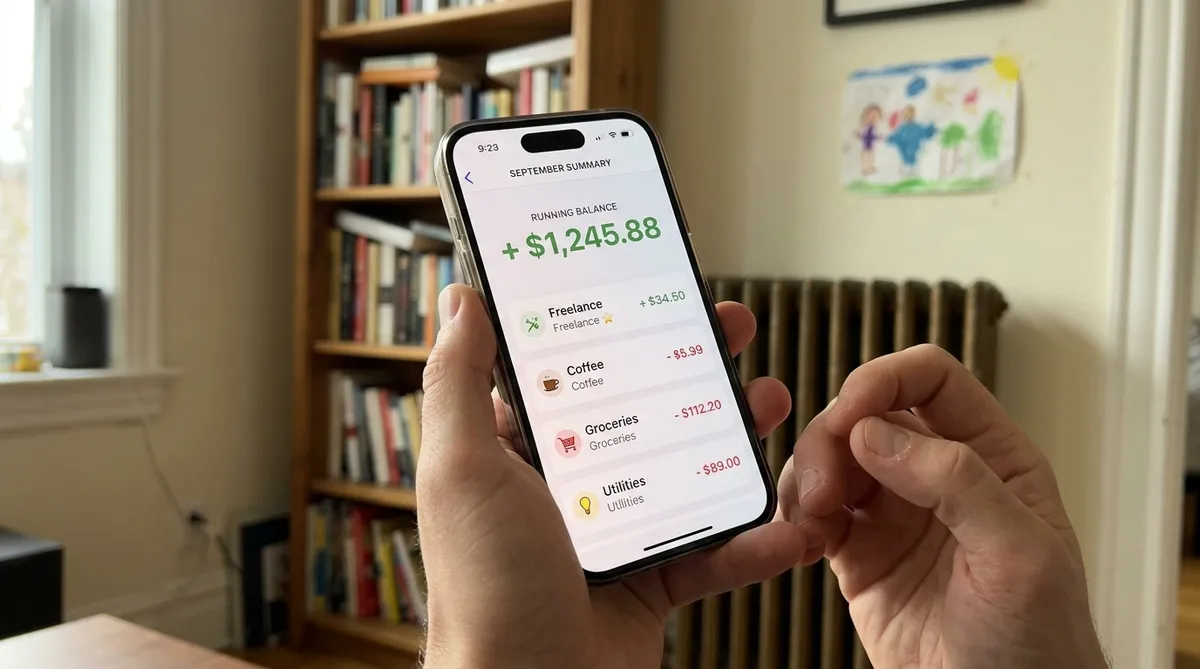
If you want to see the numbers before you commit to any tool, run your own split through our free expense calculator. It takes two minutes and no signup.
Frequently Asked Questions
Is DComply cheaper than OurFamilyWizard? Yes, by a lot. DComply lists Basic at $2.99 a month and Premium at $5.99 a month, checked September 2026. OurFamilyWizard runs $110 to $299.88 a year per parent, so $220 to about $600 for a household of two. DComply also keeps a co-parent who only pays or views bills on its free tier indefinitely, so one household can often run on a single subscription.
Which co-parenting app is best for just splitting expenses? If expenses are the only fight, you want the cheapest tool both parents will actually open. DComply and CoParentSplit both do the ledger and the running balance. CoParentSplit charges $6.99 a month or $59.99 a year for both parents on one plan, and its free tier covers 10 expenses a month.
Does DComply work for court documentation? DComply exports expense and payment reports, which covers receipts and who paid what. It is not the tool judges and lawyers name by default for communication records. OurFamilyWizard is, because of its timestamped message log and its long history with family courts across the US and Canada.
What if my co-parent refuses to use any app? Then pick the tool that logs your side cleanly and stop negotiating adoption. Track every expense with a receipt and a date, share a monthly summary instead of individual receipts, and let the totals do the arguing. A one-sided ledger is still better evidence than a year of WhatsApp screenshots.
Can one parent pay for both accounts? OurFamilyWizard has offered a single-payer option at checkout, so one parent can cover both subscriptions, though the household total stays the same. CoParentSplit's $59.99 a year covers both parents on a single plan by design, so there is no second seat to buy and nothing for your co-parent to approve.
The honest bottom of it
Any of these three beats what most co-parents are doing right now, which is photographing receipts into a WhatsApp thread and hoping someone keeps score. The system matters less than the consistency. Whatever you pick, log every expense the same day, every single time.
Stop fighting about money. Start tracking it. Try CoParentSplit free with 10 expenses a month, no card, and see whether the arguments get shorter.
Related: OurFamilyWizard Pricing 2026: The Full Cost for Both Parents · AppClose Pricing 2026: What's Actually Free and What Isn't
Ready to simplify co-parent expenses?
CoParentSplit makes it easy to track, split, and settle shared child expenses — no conflict required.
Start Free Now
Founder of CoParentSplit
Single dad of 3, product manager, and immigrant in Montreal. Built CoParentSplit after his own divorce because he needed a simpler way to split child expenses with his co-parent.